


- The volume of the extracellular fluid (ECF) mainly depends on the total amount of osmotically active solutes in the ECF.
- Sodium (Na⁺) and chloride (Cl⁻) are the main osmotically active solutes in the ECF.
- Changes in chloride (Cl⁻) usually occur because of changes in sodium (Na⁺).
- Therefore, the amount of sodium (Na⁺) in the ECF is the most important factor determining ECF volume.
- The mechanisms that regulate sodium (Na⁺) balance are the main mechanisms that maintain ECF volume.
- Water excretion is also controlled according to ECF volume.
- When ECF volume increases, vasopressin (ADH) secretion decreases.
- When ECF volume decreases, vasopressin (ADH) secretion increases.
- Changes in ECF volume have a stronger effect on ADH secretion than changes in plasma osmolality.
- Angiotensin II stimulates the secretion of both aldosterone and vasopressin (ADH).
- Angiotensin II also stimulates thirst.
- Angiotensin II causes blood vessels to constrict.
- These actions help maintain blood pressure during low blood volume (hypovolemia).
- Therefore, Angiotensin II is a major hormone in the body’s response to hypovolemia.
Figure: Figure 38–5
- When ECF volume increases, the heart releases:
- Atrial Natriuretic Peptide (ANP)
- B-type Natriuretic Peptide (BNP)
- ANP and BNP increase sodium excretion (natriuresis).
- ANP and BNP also increase water excretion (diuresis).
- Loss of water alone (dehydration) causes only a moderate decrease in ECF volume.
- This is because water is lost from both the intracellular fluid (ICF) and the extracellular fluid (ECF).
- Excessive sodium loss causes a much greater decrease in ECF volume.
- Excess sodium loss can occur due to:
- Diarrhea
- Severe acidosis
- Adrenal insufficiency
- Excessive sweating (heat prostration)
- Severe sodium loss can eventually lead to shock.
- During shock, the body’s immediate response is to maintain blood volume inside the blood vessels (intravascular volume).
- These responses also help regulate sodium balance.
- In adrenal insufficiency, ECF volume decreases because:
- Sodium is lost in the urine.
- Sodium also moves into the cells.
- Because sodium is essential for maintaining ECF volume, the body has several mechanisms to control sodium excretion.
- When ECF volume decreases:
- Blood pressure falls.
- Glomerular capillary pressure decreases.
- Glomerular Filtration Rate (GFR) decreases.
- Less sodium is filtered by the kidneys.
- At the same time, the kidneys increase sodium reabsorption.
- One reason is increased aldosterone secretion.
- Aldosterone secretion increases when intravascular pressure decreases.
- Some changes in sodium excretion occur too quickly to be explained only by aldosterone.
- For example, standing up from a lying position quickly decreases sodium excretion.
- This rapid response occurs within a few minutes.
- It also occurs in people without adrenal glands (adrenalectomized individuals).
- Therefore, this rapid response is mainly due to changes in blood circulation (hemodynamic changes).
- It may also be partly due to reduced ANP secretion.
- The kidneys produce three important hormones:
- 1,25-dihydroxycholecalciferol
- Renin
- Erythropoietin
- Natriuretic peptides released by the heart and other tissues increase sodium excretion by the kidneys.
- Another natriuretic hormone, endogenous ouabain, increases sodium excretion by inhibiting the Na⁺/K⁺-ATPase pump.
Figure: Figure 38–5
KEY CONCEPT
- ECF volume mainly depends on the amount of sodium (Na⁺) in the extracellular fluid. When ECF volume falls, the body conserves sodium and water by increasing ADH, aldosterone, and angiotensin II. When ECF volume rises, ANP and BNP increase sodium and water excretion to reduce the volume.
Conceptual Examples
- Example 1: A patient with severe diarrhea loses a large amount of Na⁺ and water, causing low ECF volume (hypovolemia). The body responds by increasing ADH, aldosterone, and angiotensin II to conserve sodium and water.
- Example 2: After receiving large amounts of intravenous saline, ECF volume increases. The heart releases ANP and BNP, causing the kidneys to excrete more sodium (natriuresis) and more water (diuresis), returning ECF volume toward normal.
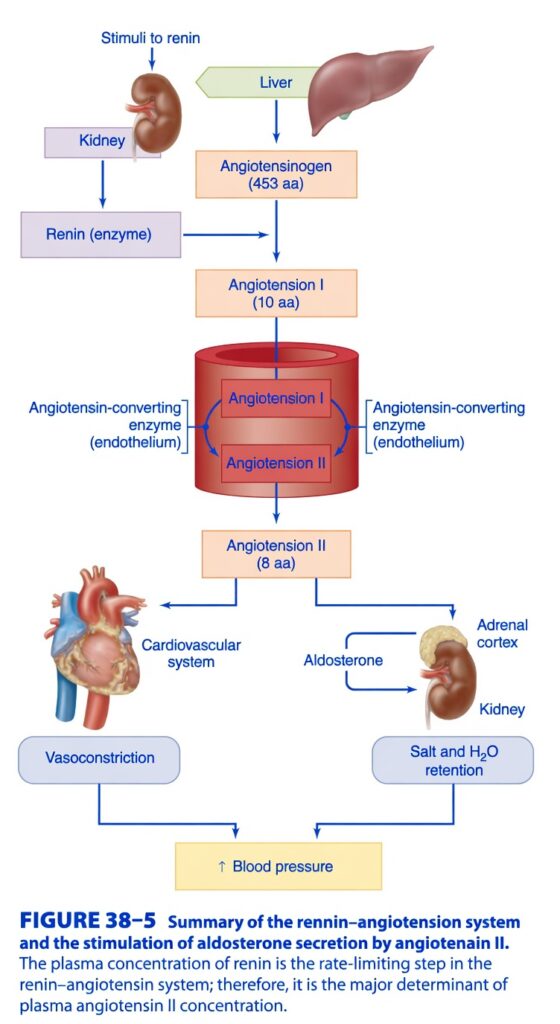
Figure 38-5: Renin–Angiotensin–Aldosterone System (RAAS)
Easiest & Most Conceptual Explanation for SELF LEARNERS
This figure explains how the body raises blood pressure when blood pressure, blood volume, or kidney blood flow becomes low.
This is one of the most important hormone systems in physiology.
⭐ One-Line Concept
Low blood pressure → Kidney releases Renin → Angiotensin II is formed → Blood vessels constrict + Aldosterone is released → Salt and water are retained → Blood pressure increases.
First Understand the Big Picture
Imagine your body is a city.
The kidney acts like a pressure sensor.
When blood pressure falls, the kidney immediately sends an emergency signal.
That emergency system is called the:
Renin–Angiotensin–Aldosterone System (RAAS)
Its goal is very simple:
Restore blood pressure and blood volume.
The Complete Story
Low Blood Pressure
        ↓
Kidney releases Renin
        ↓
Renin acts on Angiotensinogen
        ↓
Angiotensin I is formed
        ↓
ACE converts Angiotensin I
        ↓
Angiotensin II
        ↓
Two Major Effects
     ↙          ↘
Vasoconstriction  Aldosterone Release
      ↓                 ↓
Higher BP      Salt & Water Retention
          ↓
     Blood Pressure Increases
Step 1: Stimulus to Renin
Look at the top left of the figure.
It says:
Stimuli to Renin
This means something tells the kidney:
“Blood pressure is too low!”
Common stimuli include:
- ↓ Blood pressure
- ↓ Blood volume
- ↓ Sodium delivery to the distal tubule
- ↑ Sympathetic stimulation (β₁ receptors)
What does the kidney do?
The kidney releases:
Renin
Renin is an enzyme, not a hormone.
Easy Concept
Think of the kidney as a security guard.
When pressure drops,
the guard presses an alarm button.
That alarm is Renin.
Step 2: Liver Produces Angiotensinogen
Look at the liver.
The liver continuously produces:
Angiotensinogen (453 amino acids)
It circulates in the blood.
It is inactive.
Easy Concept
Think of angiotensinogen as:
Raw material waiting to be activated.
Step 3: Renin Acts on Angiotensinogen
Renin cuts angiotensinogen.
This produces:
Angiotensin I
The figure shows:
10 amino acids
Easy Concept
Renin acts like scissors.
Angiotensinogen
      ↓
   Renin
      ↓
Angiotensin I
Is Angiotensin I Active?
No.
It has very little biological activity.
It mainly serves as the precursor of Angiotensin II.
Step 4: ACE Converts Angiotensin I into Angiotensin II
Look at the blood vessel.
Inside the vessel wall is:
Angiotensin-Converting Enzyme (ACE)
Located mainly on vascular endothelium, especially in the lungs.
ACE removes two amino acids.
Now Angiotensin I becomes:
Angiotensin II
The figure shows:
8 amino acids
Easy Concept
ACE is like a finishing machine.
Angiotensin I
      ↓
ACE
      ↓
Angiotensin II
Step 5: Angiotensin II
This is the main active hormone of RAAS.
Everything important starts here.
It has two major actions shown in the figure.
First Action: Vasoconstriction
Look at the left branch.
Angiotensin II acts on:
Cardiovascular System
It causes:
Vasoconstriction
Meaning:
Blood vessels become narrower.
Why?
Narrower blood vessels increase resistance.
Higher resistance increases blood pressure.
Easy Analogy
Imagine squeezing a garden hose.
The water pressure increases.
Exactly the same thing happens in blood vessels.
Result
Angiotensin II
      ↓
Vasoconstriction
      ↓
↑ Blood Pressure
Second Action: Aldosterone Release
Look at the right branch.
Angiotensin II stimulates the:
Adrenal Cortex
The adrenal cortex releases:
Aldosterone
Easy Concept
Angiotensin II tells the adrenal gland:
“Save more salt!”
What Does Aldosterone Do?
Aldosterone acts mainly on the:
- Late distal tubule
- Collecting duct
It causes:
↑ Sodium reabsorption
↓
Water follows sodium
↓
Blood volume increases
↓
Blood pressure increases
It also increases:
↑ Potassium secretion
Easy Analogy
Imagine adding more salt to a sponge.
The sponge attracts and holds more water.
Similarly,
the body retains sodium,
and water follows.
Final Effect of Aldosterone
Aldosterone
      ↓
More Na⁺ Reabsorbed
      ↓
More Water Retained
      ↓
Higher Blood Volume
      ↓
Higher Blood Pressure
Two Main Ways RAAS Raises Blood Pressure
1. Vasoconstriction
Works quickly.
Blood Vessels Narrow
        ↓
Pressure Immediately Rises
2. Salt and Water Retention
Works more slowly.
More Na⁺
      ↓
More Water
      ↓
More Blood Volume
      ↓
Higher Blood Pressure
Complete Story of the Figure
Low Blood Pressure
        ↓
Kidney Detects It
        ↓
Renin Released
        ↓
Renin Converts
Angiotensinogen
        ↓
Angiotensin I
        ↓
ACE
        ↓
Angiotensin II
      ↙           ↘
Vasoconstriction   Aldosterone
      ↓               ↓
Higher BP      Na⁺ Retention
                    ↓
              Water Retention
                    ↓
             Blood Volume ↑
                    ↓
           Blood Pressure ↑
Everyday Analogy
Imagine a city where the water pressure suddenly falls.
The city takes two actions:
Action 1
Workers tighten the pipes.
Pressure immediately rises.
This is:
Vasoconstriction
Action 2
The city stores more water in reservoirs.
Water supply increases.
This is:
Aldosterone-mediated sodium and water retention
Together,
both actions restore normal pressure.
Easy Memory Trick
Remember: “RAA”
R = Renin
Starts the system.
↓
A = Angiotensin II
Raises blood pressure directly by vasoconstriction.
↓
A = Aldosterone
Saves sodium and water.
High-Yield Exam Points
- Renin is released by the juxtaglomerular (JG) cells of the kidney in response to decreased renal perfusion pressure, decreased NaCl delivery to the macula densa, or increased sympathetic stimulation (β₁ receptors).
- Renin is an enzyme, not a hormone. It converts angiotensinogen (produced by the liver) into angiotensin I (10 amino acids).
- Angiotensin-converting enzyme (ACE), located mainly on the vascular endothelium (especially pulmonary endothelium), converts angiotensin I into angiotensin II (8 amino acids).
- Angiotensin II is the principal effector molecule of the RAAS.
- Angiotensin II causes arteriolar vasoconstriction, increasing systemic vascular resistance and rapidly elevating blood pressure.
- Angiotensin II also stimulates the zona glomerulosa of the adrenal cortex to secrete aldosterone.
- Aldosterone increases Na⁺ reabsorption and K⁺ secretion in the late distal tubule and collecting duct. Water follows sodium, expanding extracellular fluid volume and increasing blood pressure.
- The plasma concentration of renin is the rate-limiting step in the renin–angiotensin system and is therefore the major determinant of angiotensin II production.
KEY CONCEPT (Figure 38-5)
Figure 38-5 summarizes the Renin–Angiotensin–Aldosterone System (RAAS), the body’s major hormonal mechanism for maintaining arterial blood pressure and extracellular fluid volume. When renal perfusion falls, the kidney releases renin, which cleaves liver-derived angiotensinogen into angiotensin I. ACE, located primarily on vascular endothelial cells, converts angiotensin I into the active peptide angiotensin II. Angiotensin II raises blood pressure by direct vasoconstriction and by stimulating the adrenal cortex to secrete aldosterone, which enhances renal Na⁺ and water reabsorption. These combined actions restore blood volume and arterial pressure. The amount of renin released by the kidney is the rate-limiting step of the entire RAAS pathway.
MADE BY SELF LEARNING CEO AND FOUNDER DR SHEEN
