

- Under-5 Mortality Rate (U5MR) is an important indicator of child health and national development.
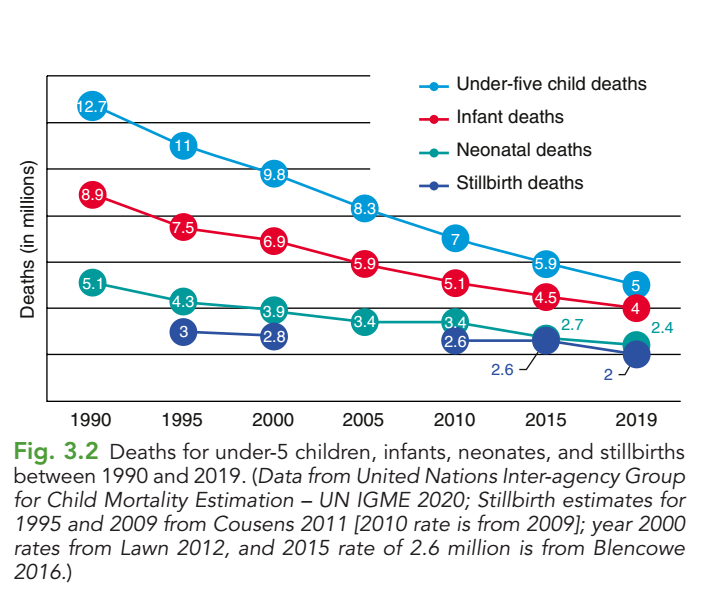
- Global under-5 mortality decreased significantly between 1990 and 2020.
- Millions of children under 5 years still die each year worldwide.
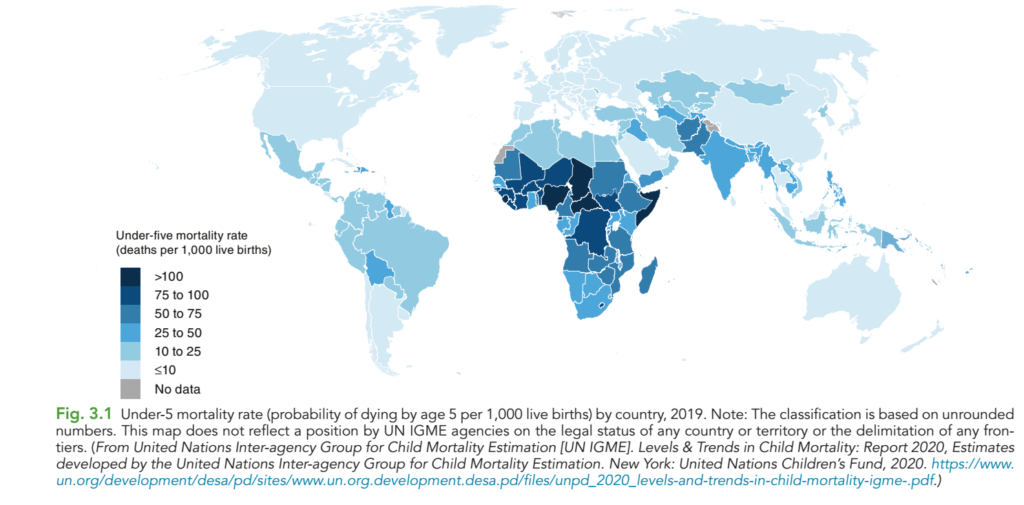
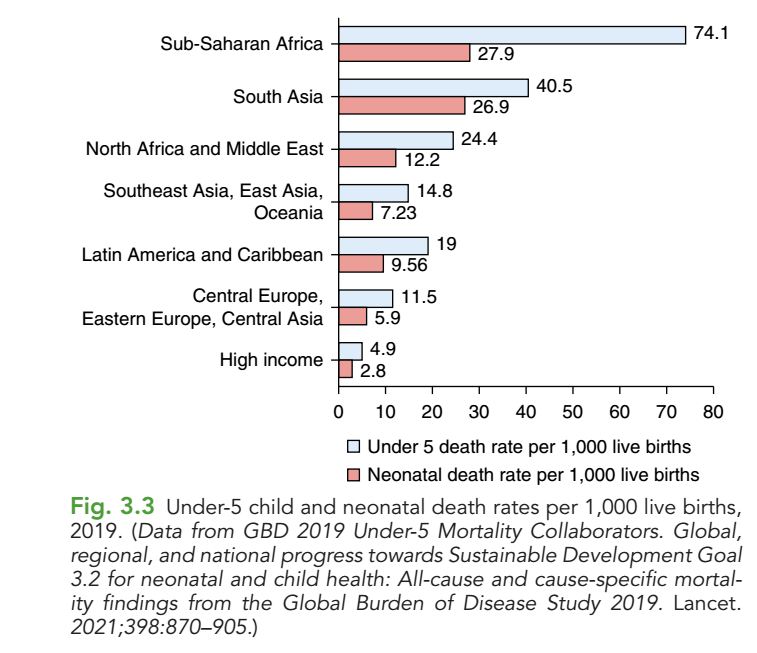
- Most child deaths occur in low- and middle-income countries of Africa and Asia.
- Children born in sub-Saharan Africa have a much higher risk of dying before age 5 than children born in high-income countries.
- Child mortality improvements are uneven across countries and regions.
- Large health inequalities still exist between rich and poor populations.
- The neonatal period (first month of life) is the most vulnerable stage of childhood.
- Nearly half of all under-5 deaths occur during the first month of life.
- Neonatal mortality has declined more slowly than overall child mortality.
- Newborns in sub-Saharan Africa and South Asia have a much greater risk of death than those in high-income countries.
- Stillbirth remains a major global health problem.
- Most stillbirths occur in low- and middle-income countries.
- Progress in reducing stillbirths has been slow.
- Better care during pregnancy and delivery can prevent many stillbirths.
- Most childhood deaths are preventable with simple and affordable interventions.
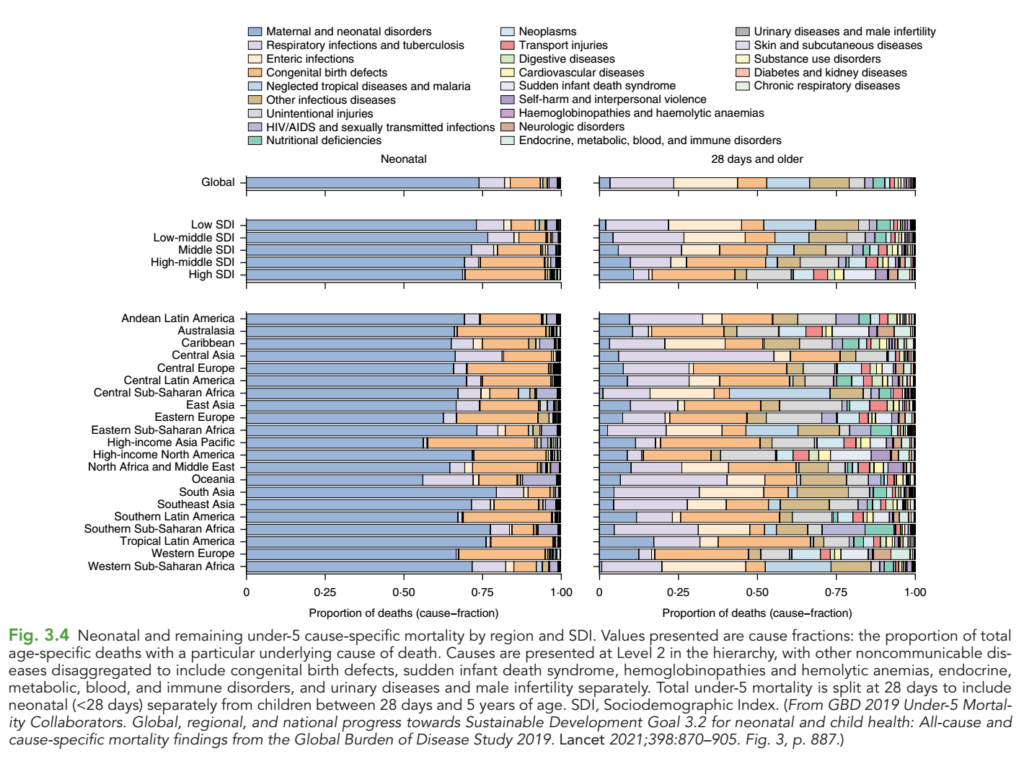
- Major causes of child death include:
- Preterm birth complications
- Birth-related complications
- Pneumonia
- Diarrhea
- Infectious diseases remain a major cause of under-5 mortality.
- Many child deaths can be prevented through vaccination.
- Neonatal disorders account for a large proportion of under-5 deaths.
- Undernutrition contributes significantly to child mortality and poor development.
- Important forms of undernutrition include:
- Fetal growth restriction
- Stunting
- Wasting
- Micronutrient deficiencies
- Undernutrition weakens immunity and increases susceptibility to infection.
- Recurrent infections further worsen nutritional status.
- Early-life undernutrition can impair learning, school performance, and future productivity.
- Low birth weight is a major risk factor for neonatal death.
- Prematurity and fetal growth restriction are major causes of low birth weight.
- Quality care during labor and delivery can prevent many newborn deaths.
- Mortality is lower in children aged 5–14 years than in younger children.
- Injuries and noncommunicable diseases become more important causes of death in this age group.
- Child health should be assessed beyond survival alone.
- Many children live with lifelong disabilities.
- Most disabled children live in low- and middle-income countries.
- Major causes of childhood disability include:
- Neonatal disorders
- Infectious diseases
- Malnutrition
- Hemoglobin disorders
- Injuries
- Stillbirth and child loss can seriously affect maternal health.
- Child loss may lead to psychological problems such as stress, depression, anxiety, and social stigma.
- Adolescents represent a large and growing proportion of the world’s population.
- Most adolescents live in low- and middle-income countries.
- Adolescents often receive less support than younger children.
- Major challenges faced by adolescents include:
- Limited education opportunities
- Limited employment opportunities
- Injuries and violence
- HIV/AIDS
- Mental health problems
- Early marriage
- Teenage pregnancy
- Adolescence is a critical period for breaking the cycle of poverty and inequality.
- Early marriage and adolescent pregnancy increase the risks of maternal mortality and child undernutrition.
KEY CONCEPT
- Most child deaths occur in low- and middle-income countries, especially in Africa and South Asia.
- The neonatal period is the highest-risk period for child survival.
- Most childhood deaths are preventable through simple healthcare interventions.
- Undernutrition and infection create a vicious cycle that increases child mortality.
- Child health includes survival, growth, development, and freedom from disability.
- Supporting adolescents is essential to improve future generations’ health and well-being.