


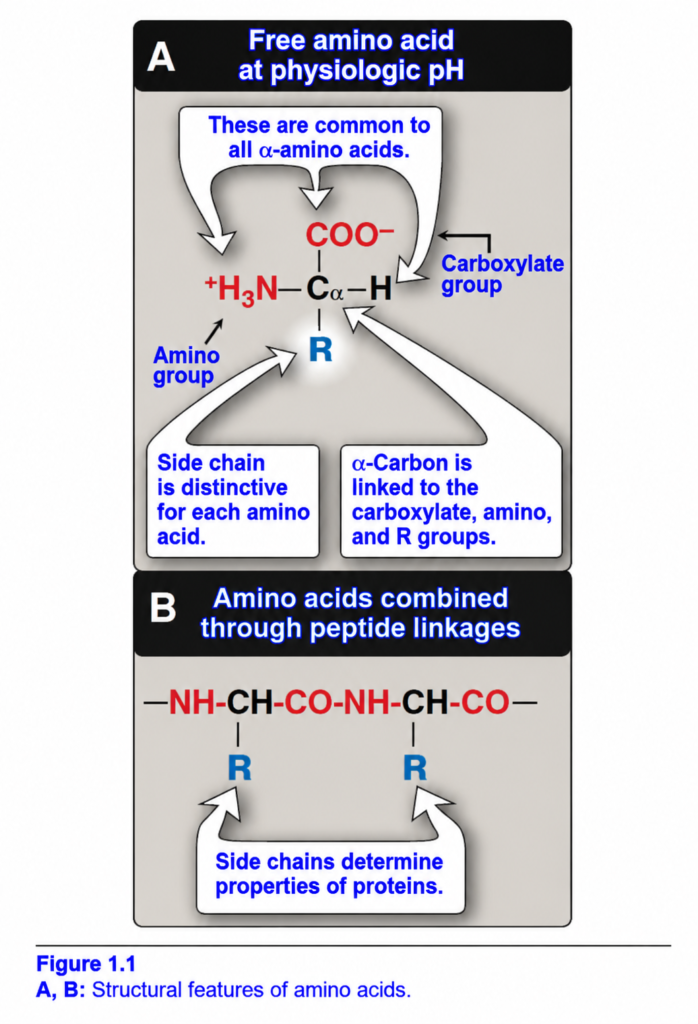
Figure 1.1 — STRUCTURAL FEATURES OF AMINO ACIDS
🧠 Simplest idea
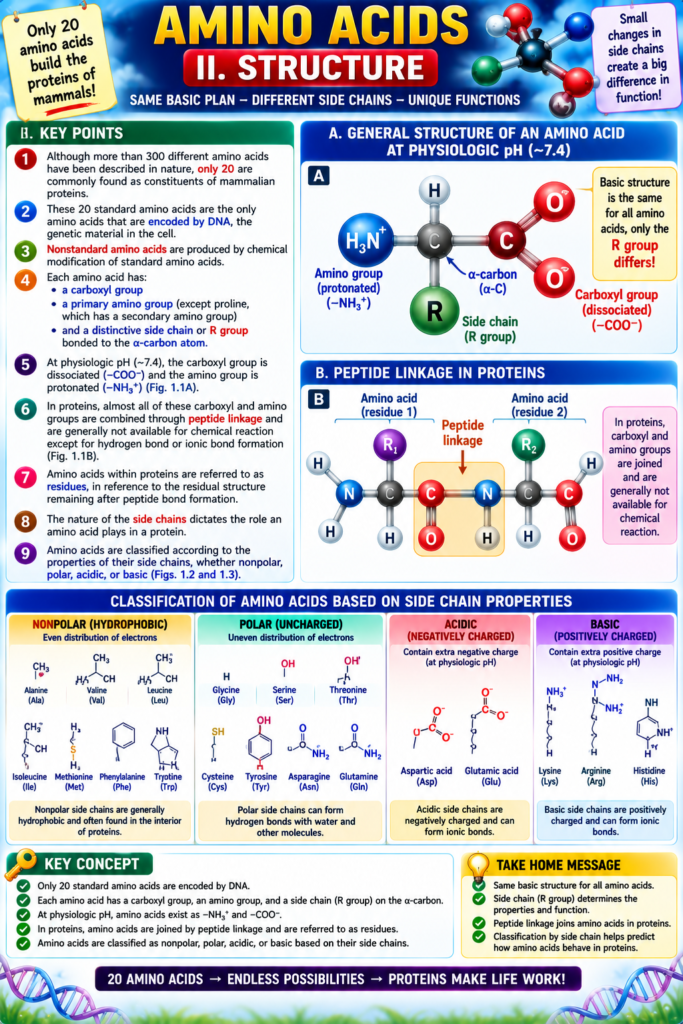
Every amino acid has the same central structure; the R group is the part that changes. Amino acids join by peptide bonds to form proteins.
A️⃣ FREE AMINO ACID at physiologic pH
At the center is:
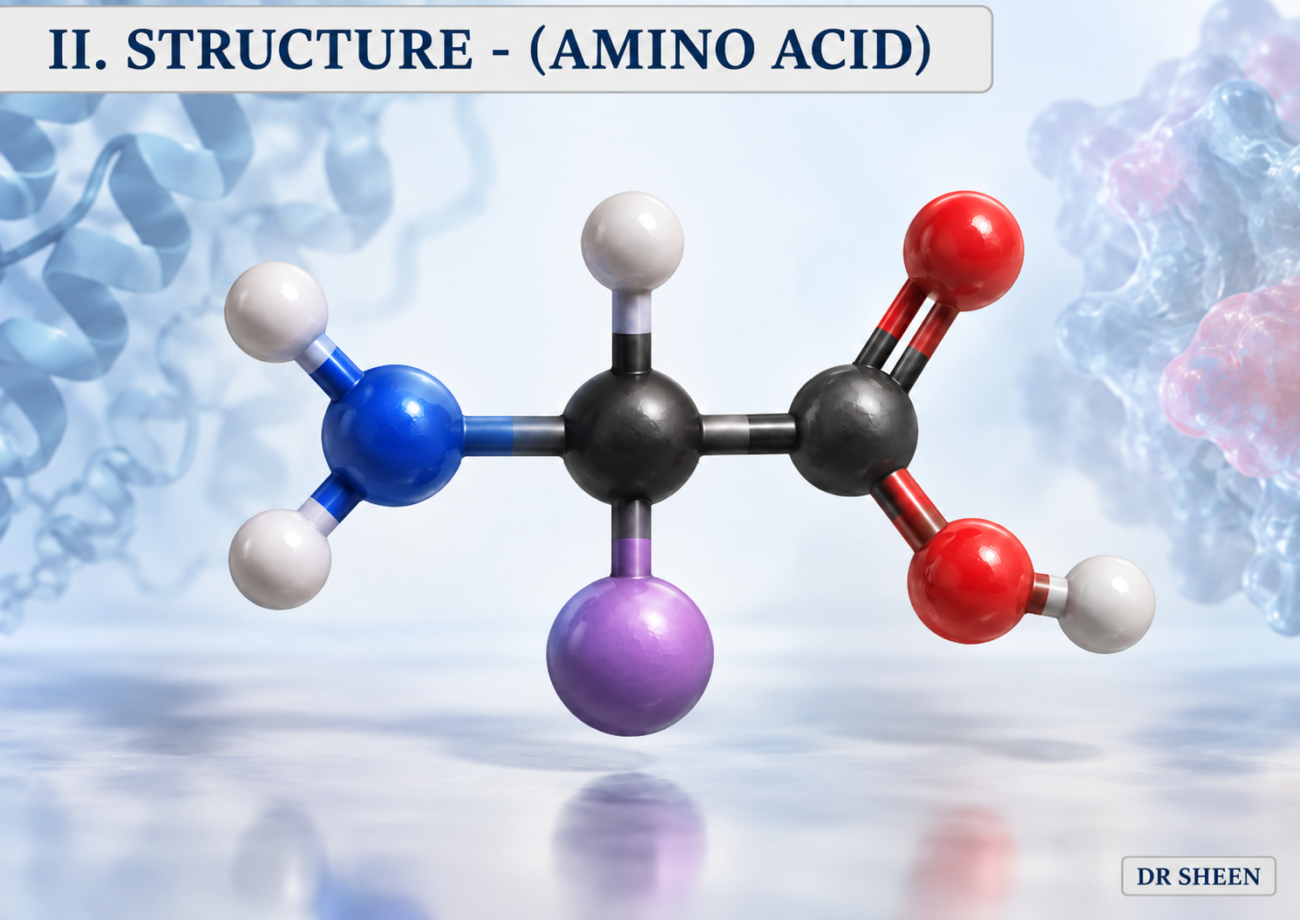
Cα = alpha carbon
This carbon is attached to 4 groups:
1. +H₃N = amino group
2. COO⁻ = carboxylate group
3. H = hydrogen
4. R = side chain
Easy formula:
NH₃⁺ — Cα(H)(R) — COO⁻
🔴 +H₃N = Amino group
At physiologic pH:
NH₂ gains H⁺ → NH₃⁺
So it carries a:
positive charge (+)
🔴 COO⁻ = Carboxylate group
At physiologic pH:
COOH loses H⁺ → COO⁻
So it carries a:
negative charge (−)
⚡ Why both + and − charges?
Because the same amino acid has:
NH₃⁺ = positive
+
COO⁻ = negative
This form is called a:
Zwitterion
🧠 Zwitterion = molecule containing both + and − charges.
🔵 R group = Side chain
The blue R is the only major part that is different among amino acids.
Therefore:
Different R group → different amino acid → different properties
R group determines whether an amino acid is:
- acidic
- basic
- polar
- nonpolar
- hydrophobic
- hydrophilic
🧠 Memory:
R = “personality” of the amino acid
⚪ White arrows — what are they showing?
The upper arrows show that these are common to α-amino acids:
Amino group + carboxylate group + α-carbon + H
The lower-left arrow points to:
R group → distinctive for each amino acid
The lower-right arrow emphasizes:
α-carbon is the central attachment point.
B️⃣ AMINO ACIDS JOIN THROUGH PEPTIDE LINKAGES
The lower panel shows the repeating chain:
—NH—CH—CO—NH—CH—CO—
This is the peptide/protein backbone.
🔗 Peptide bond
Amino acids connect when:
Carboxyl group of amino acid 1
+
Amino group of amino acid 2
form:
—CO—NH—
That C–N linkage is the peptide bond.
🔵 R groups project outward
Notice the blue R groups hanging from the chain.
The backbone is similar, but each R group can be different.
Therefore:
Different R groups
→ different interactions
→ different protein folding
→ different protein function.
🎨 COLOR GUIDE
- 🔴 Red = amino/carboxyl groups and peptide backbone
- 🔵 Blue = R side chains and labels
- ⚫ Black = α-carbon, H, and carbon skeleton
- ⚪ White arrows = important structural relationships
⭐ Whole figure in one flow
Free amino acid
→ α-carbon + NH₃⁺ + COO⁻ + H + R
⬇️ amino acids join
Peptide bonds form
⬇️
Polypeptide chain
⬇️
Protein
🧠 Fastest exam recall
α-carbon has 4 attachments: NH₃⁺, COO⁻, H, R.
R group = unique part.
At physiologic pH = zwitterion.
—CO—NH— = peptide bond.
R groups determine protein properties.
