


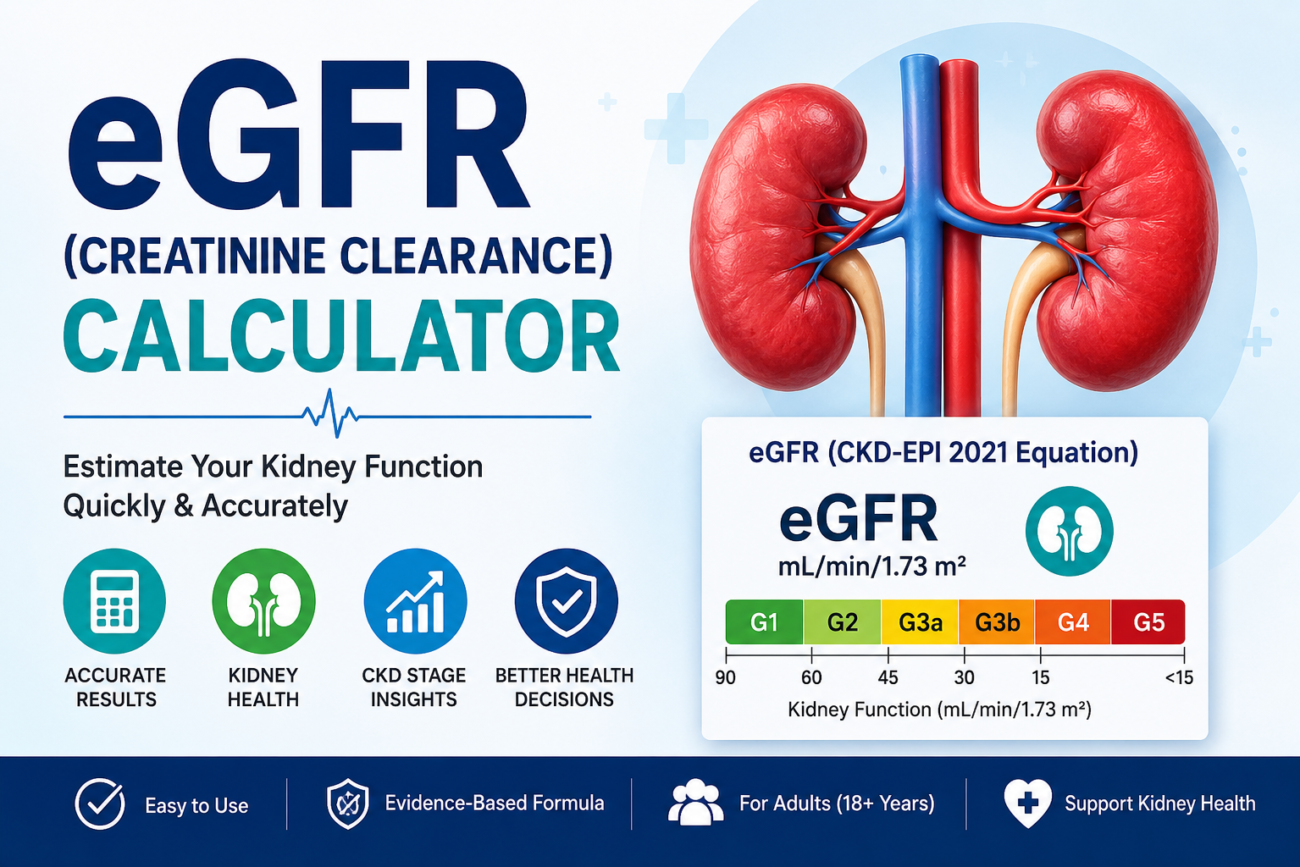
🩺 eGFR (Creatinine Clearance) Calculator
Estimate kidney function using age, sex and serum creatinine.
Our Free eGFR (Estimated Glomerular Filtration Rate) Calculator helps estimate how well your kidneys are filtering waste from your blood. By entering your age, gender, and serum creatinine level, you can receive an estimated eGFR value along with an interpretation of your kidney function.
This calculator is intended for adults (18 years and older) and uses the 2021 CKD-EPI creatinine equation, which is widely used in clinical practice to estimate kidney function.
What Is eGFR?
The Estimated Glomerular Filtration Rate (eGFR) is a blood test calculation that estimates how efficiently your kidneys filter waste products and excess fluid from your bloodstream.
Your eGFR is calculated using:
- Age
- Biological sex
- Serum creatinine level (a waste product produced by muscles)
Healthcare professionals commonly use eGFR to detect, monitor, and manage chronic kidney disease (CKD).Why Is eGFR Important?
Healthy kidneys continuously remove toxins, waste products, and extra water from your body while maintaining proper electrolyte balance.
A reduced eGFR may indicate decreased kidney function. Early detection allows treatment and lifestyle changes that may help slow kidney damage.
Monitoring your kidney function is especially important if you have:
- Diabetes
- High blood pressure
- Heart disease
- Obesity
- A family history of kidney disease
- Kidney stones
- Frequent urinary tract infections
What Is Serum Creatinine?
Serum creatinine is a waste product released by normal muscle activity.
Healthy kidneys remove creatinine from the bloodstream. When kidney function declines, creatinine levels often rise, causing the estimated eGFR to decrease.
Understanding Your eGFR Results
| eGFR (mL/min/1.73 m²) | Kidney Function |
|---|---|
| 90 or higher | G1 – Normal or High |
| 60–89 | G2 – Mildly Decreased |
| 45–59 | G3a – Mild to Moderate Decrease |
| 30–44 | G3b – Moderate to Severe Decrease |
| 15–29 | G4 – Severely Decreased |
| Below 15 | G5 – Kidney Failure |
A lower eGFR does not always mean kidney disease. Your healthcare provider may recommend repeat testing, urine tests, blood pressure evaluation, or kidney imaging to determine the cause.
How Can You Improve Kidney Health?
While some kidney conditions cannot be reversed, healthy habits may help protect kidney function.
Maintain Healthy Blood Pressure
High blood pressure is one of the leading causes of kidney damage. Monitor your blood pressure regularly and follow your healthcare provider’s recommendations.
Control Blood Sugar
People with diabetes should keep their blood glucose within the recommended range to reduce the risk of diabetic kidney disease.
Drink Enough Water
Staying hydrated supports normal kidney function. Fluid needs vary from person to person, so ask your healthcare provider if you have heart or kidney disease.
Eat a Kidney-Friendly Diet
Choose foods such as:
- Fresh fruits
- Vegetables
- Whole grains
- Fish
- Skinless chicken
- Healthy fats
- Low-sodium foods
Limit:
- Processed foods
- Excess salt
- Sugary drinks
- Highly processed snacks
- Excessive alcohol
Exercise Regularly
Aim for at least 150 minutes of moderate physical activity each week to help maintain a healthy weight and support cardiovascular and kidney health.
Avoid Smoking
Smoking reduces blood flow to the kidneys and increases the risk of kidney disease progression.
Take Medicines Responsibly
Some medications, including certain pain relievers such as nonsteroidal anti-inflammatory drugs (NSAIDs), can affect kidney function if used frequently or in high doses. Always follow medical advice.
Who Should Check Their eGFR?
You should consider checking your kidney function if you:
- Have diabetes
- Have high blood pressure
- Are over 60 years of age
- Have a family history of kidney disease
- Have persistent swelling in your legs or feet
- Notice blood in your urine
- Have protein in your urine
- Experience unexplained fatigue or weakness
Frequently Asked Questions
Is eGFR the same as creatinine clearance?
No. eGFR is an estimate of kidney filtration based on serum creatinine and other factors. Creatinine clearance is a different measurement that may be estimated using formulas such as the Cockcroft–Gault equation or measured directly with urine collection.
What is a normal eGFR?
For many healthy adults, an eGFR of 90 mL/min/1.73 m² or higher is considered normal, provided there are no other signs of kidney disease.
Can eGFR improve?
Yes. In some situations, improving blood pressure control, blood sugar management, hydration, and addressing underlying medical conditions may improve or stabilize kidney function. However, some causes of kidney disease are chronic and require ongoing medical care.
Is this calculator a medical diagnosis?
No. This calculator provides an estimate for educational purposes only. Always discuss abnormal results with a qualified healthcare professional.
Disclaimer
This eGFR Calculator is provided for educational and informational purposes only. It is not intended to diagnose, treat, cure, or prevent any disease. Laboratory results should always be interpreted by a qualified healthcare professional together with your medical history, symptoms, physical examination, and other diagnostic tests.
