


Convex Lens Focuses Light Rays
- A convex lens is thicker in the center and bends parallel light rays toward the center (Fig. 50.2).
- Rays passing through the center of the lens strike almost perpendicular to the surface:
- very little/no bending
- continue almost straight
- Rays passing near the edges strike the lens at a greater angle:
- greater refraction
- bend more toward the center
- Therefore: Farther from lens center → greater angle → greater bending toward center
- Bending toward each other is called convergence.
- Refraction occurs at both surfaces of the lens:
- part of the bending occurs when light enters
- the remaining bending occurs when light leaves
- With the proper lens curvature: parallel rays → convex lens → rays converge → meet at one point
- That single meeting point is called the focal point.
KEY CONCEPT
- Convex lens = converging lens.
- Central rays → little bending.
- Outer rays → more bending.
- All parallel rays come together → focal point.
CONCEPTUAL EXAMPLE
Imagine many straight light rays entering a convex lens:
Parallel rays → lens bends outer rays inward → all rays meet together → FOCAL POINT
Easy memory:
Convex = Converges = Comes together.
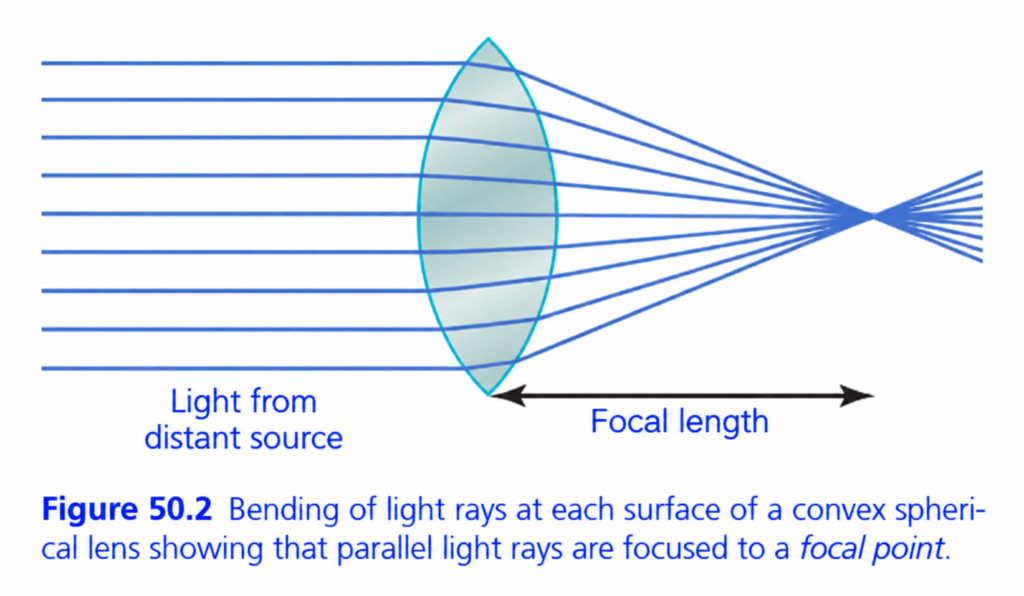
Figure 50.2 — Convex Lens Focuses Parallel Light Rays
This figure shows how a convex lens bends parallel light rays and brings them together at one point called the focal point.
The complete idea is:
Light from distant source → parallel rays → convex lens → refraction at first surface + refraction at second surface → rays converge → focal point
1. What is a convex lens?
A convex lens is:
- thicker in the center
- thinner at the edges
In the figure, the light green/blue curved structure is the convex lens.
A convex lens is also called a:
Converging lens
because it brings parallel light rays together.
2. Blue horizontal lines on the left = light rays
The blue lines coming from the left are:
Parallel light rays
The label says:
“Light from distant source.”
Why are they parallel?
When a light source is very far away, such as the sun, the rays reaching the lens are almost parallel.
So:
Very distant object → rays reaching lens ≈ parallel
3. What happens when the rays first enter the lens?
Light is moving from:
Air → lens material
The lens has a higher refractive index than air.
Therefore:
Light slows down
and, when it enters at an angle:
It bends toward the normal.
This bending is called:
Refraction
4. What is the “normal”?
The normal is an imaginary line drawn 90° to the lens surface at the exact point where a ray strikes it.
This is important because the lens surface is curved.
Therefore, the normal has a different direction at different parts of the lens.
That is why different rays bend by different amounts.
5. Look at the ray through the center
The middle blue ray travels approximately through the center of the lens.
It strikes the surfaces almost perpendicular to them.
Therefore, it undergoes very little net change in direction.
So in this simplified diagram:
Central ray → almost straight through
Easy rule
Center → almost no bending
6. Now look at rays above the center
The upper rays hit the curved lens surface at an angle.
When they enter:
Air → glass/lens
they bend toward the normal.
Because of the curvature of the convex lens, this bends them generally:
downward toward the central axis
So:
Upper peripheral rays → bend downward
7. Rays below the center
The lower rays also strike the lens obliquely.
After refraction, they bend:
upward toward the central axis
So:
Lower rays → bend upward
Now you can see the important effect:
Upper rays move down
+
Lower rays move up
↓
Rays converge.
8. Refraction happens at BOTH surfaces
This is a very important point.
A ray does not bend only once.
It bends:
First surface
Air → lens
and again at:
Second surface
Lens → air
9. First surface: Air → Lens
At the first curved surface:
Air → higher refractive index lens
Therefore:
ray bends toward normal
This starts directing peripheral rays toward the center.
10. Second surface: Lens → Air
Now light leaves the lens:
Lens → air
It is moving from a higher refractive index to a lower refractive index.
Therefore:
It bends away from the normal.
You might think:
“If it bends away from the normal, why does it still go toward the focal point?”
Because the normal at the second curved surface is itself angled.
Due to the shape of the convex lens, bending away from that local normal still causes the emerging ray to become more directed toward the principal axis.
So both surfaces contribute to the final:
Convergence
11. Why do rays near the edges bend more?
Look at the uppermost and lowermost rays.
They hit the lens at a larger angle than the central rays.
Therefore they undergo more refraction.
So:
Near center → little bending
Toward edges → greater bending
This is exactly what allows rays from different heights to meet at approximately the same point.
12. What is the central horizontal line?
The central horizontal direction through the middle of the lens is the:
Principal axis
It is the main reference line of the optical system.
The focal point lies on this axis.
13. What is the focal point?
Look at the point on the right where all the blue rays meet.
That is the:
Focal point (F)
Definition:
The focal point is the point where parallel rays, after passing through a convex lens, converge.
So:
Parallel rays → convex lens → convergence → focal pointWhat happens exactly at the focal point?
Before the focal point:
rays are coming closer together
At the focal point:
rays meet
After the focal point:
rays cross each other and spread apart again
This is why the blue rays form an X-like pattern after the focus.
So:
Converge → focus → cross → diverge
15. What is focal length?
The black double-headed arrow labeled:
Focal length
represents the distance from the lens’s optical center/principal reference plane to the focal point.
Symbol:
f
So:
Focal length = distance between lens and focal point for parallel incoming rays
16. What does a short focal length mean?
If the lens bends light very strongly:
rays meet quickly
Therefore:
focal length is short
So:
Strong lens → more bending → short focal length
17. What does a long focal length mean?
If the lens bends light only a little:
rays need a longer distance to meet
Therefore:
focal length is long
So:
Weak lens → less bending → long focal length
18. Lens curvature and focusing
A more strongly curved convex lens usually has greater refractive power.
Therefore:
More curvature
→ more bending
→ stronger convergence
→ shorter focal length
A flatter lens causes:
less bending
→ weaker convergence
→ longer focal length
19. Lens power
Lens power is related to focal length:
Power = 1 / focal length in meters
Unit:
Diopter (D)
So:
Short focal length → high power
Long focal length → low power
Example:
If:
f = 0.5 m
then:
Power = 1 / 0.5 = +2 D
The plus sign is used for a converging/convex lens.
20. Understand every important color
The colors are for teaching; they do not mean that light or lenses literally have these colors.
- Blue straight lines on left = incoming parallel light rays
- Blue bent lines inside/right = refracted light rays
- Light green/blue transparent shape = convex lens
- Cyan outline = curved lens surfaces
- Black double arrow = focal length
- Dense blue crossing point = focal point
The most important arrow-by-arrow concept
Follow one upper ray:
Parallel ray approaches lens
→ reaches first curved surface
→ enters slower medium
→ bends toward normal
→ travels through lens
→ reaches second curved surface
→ leaves lens into air
→ bends again
→ now directed downward
→ approaches principal axis
→ reaches focal point
Now follow one lower ray:
Parallel ray
→ first refraction
→ second refraction
→ bends upward
→ reaches the same focal point
Therefore:
Convex lens brings parallel rays together.
Why does a convex lens converge light?
Because its two surfaces are curved in such a way that:
upper rays → directed downward
and
lower rays → directed upward
while the central ray stays almost straight.
All of them therefore move toward:
one common focal point
Very Easy Real-Life Analogy
Imagine many people walking forward in parallel lines.
The lens acts like a guide that tells:
- people at the top → move slightly downward
- people at the bottom → move slightly upward
- person in the middle → continue almost straight
Eventually everybody meets at one place.
That meeting place is the:
Focal point
Whole-Figure Summary
Distant source
↓
light reaches lens as parallel rays
↓
convex lens refracts the rays at both surfaces
↓
central ray → almost straight
upper rays → bend downward
lower rays → bend upward
↓
rays converge
↓
meet at:
Focal point
The distance between the lens and focal point is:
Focal length
After crossing the focal point:
rays diverge again
Key Exam Points
- A convex lens is a converging lens.
- Parallel rays usually come from a distant source.
- Refraction occurs at both surfaces of the lens.
- Air → lens: light bends toward the normal.
- Lens → air: light bends away from the normal.
- The curved lens geometry makes the final rays converge.
- Central rays undergo little net deviation.
- Peripheral rays bend more.
- Focal point = point where parallel rays converge.
- Focal length = distance from the lens to its focal point.
- Greater lens power → shorter focal length.
- After passing through the focus, rays diverge.
2-Line Exam Recall
Parallel light from a distant object enters a convex lens → peripheral rays are refracted toward the principal axis → all meet at the focal point.
Focal length is the lens-to-focus distance; stronger convex lens = greater convergence = shorter focal length.
Concave Lens Diverges Light Rays
- A concave lens is thinner in the center and causes parallel light rays to spread apart (Fig. 50.3).
- Rays passing through the center strike the lens almost perpendicularly:
- little/no refraction
- continue nearly straight
- Rays near the edges enter the lens first and bend away from the center.
- Therefore: Peripheral rays bend outward → rays spread apart
- This spreading apart of light rays is called divergence.
- So the main difference is: Concave lens → diverges light rays
Convex lens → converges light rays
KEY CONCEPT
- Concave = Diverging lens
- Convex = Converging lens
- Central ray → little/no bending
- Outer rays in a concave lens → bend outward
CONCEPTUAL EXAMPLE
Parallel rays → concave lens → rays spread outward → divergence
Easy memory:
Concave = Causes rays to Come Apart.
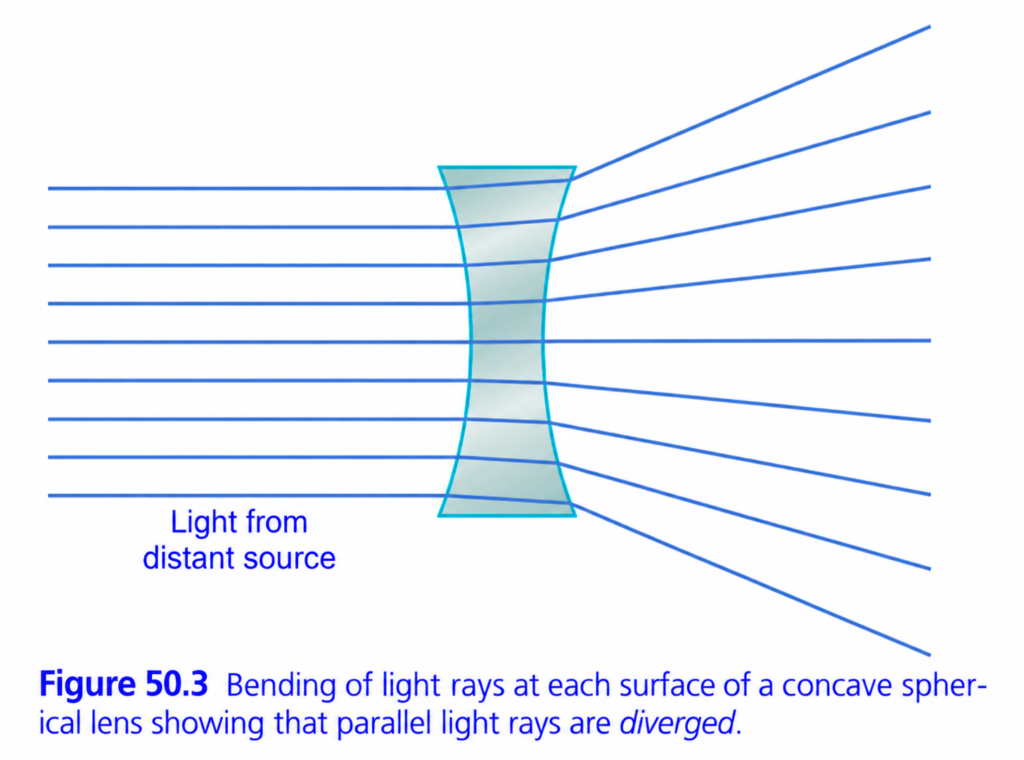
Figure 50.3 — Concave Lens Diverges Light Rays
Easiest Concept
Concave lens = thin in the center + thick at the edges → spreads light rays outward.
Read the Figure Left → Right
- Blue parallel lines on the left = light rays coming from a distant source. Because the source is very far away, the rays reach the lens almost parallel.
- Blue-green curved structure = concave lens. It is thin in the middle and thicker toward the edges.
- When light enters and leaves the lens, it is refracted (bent) at both curved surfaces.
- Central ray passes almost perpendicular through the center → little/no bending → continues straight.
- Rays a little above/below the center → bend slightly outward.
- Rays farther from the center → bend more outward.
- The outermost rays show the greatest divergence.
Cause → Effect
Parallel light rays
→ enter concave lens
→ refraction occurs at both surfaces
→ peripheral rays bend away from the central axis
→ rays spread apart (diverge).
What the Colors Show
Blue lines = paths of light rays.
Cyan/blue-green lens = concave spherical lens.
The increasing separation of the blue rays on the right shows divergence.
Important Concept
A concave lens does NOT bring parallel rays to a real focus. If the diverging rays are extended backward, they appear to come from a point on the same side as the incoming light → this is the virtual focal point.
🧠 Memory Trick
CONCAVE = CAVES IN → light COMES APART.
⭐ Exam Recall
Concave lens = diverging lens.
Center ray ≈ straight; peripheral rays bend outward, with outer rays diverging the most.
Cylindrical Lens Bends Light Rays in Only One Plane—Comparison With Spherical Lenses
- A cylindrical lens bends light in only one plane/direction.
- In Fig. 50.4:
- rays entering from the two sides are bent toward each other
- rays from the top and bottom are not bent
- Therefore: Cylindrical lens → bends light in one direction only → rays meet along a FOCAL LINE
- A spherical lens bends light from all sides:
- side rays bend inward
- top and bottom rays also bend inward
- Therefore: Spherical lens → bends light in both planes → all rays meet at one FOCAL POINT
- Easy comparison: Cylindrical lens → focal LINE
Spherical lens → focal POINT - A simple example of a cylindrical lens is a water-filled test tube: sunlight → test tube → light converges into a line
- A magnifying glass acts like a spherical lens: sunlight → magnifying glass → light converges to one point
- A concave cylindrical lens does the opposite: light rays spread apart in only one plane
- A convex cylindrical lens: light rays converge in only one plane
- Fig. 50.5A shows: point source → cylindrical lens → line focus
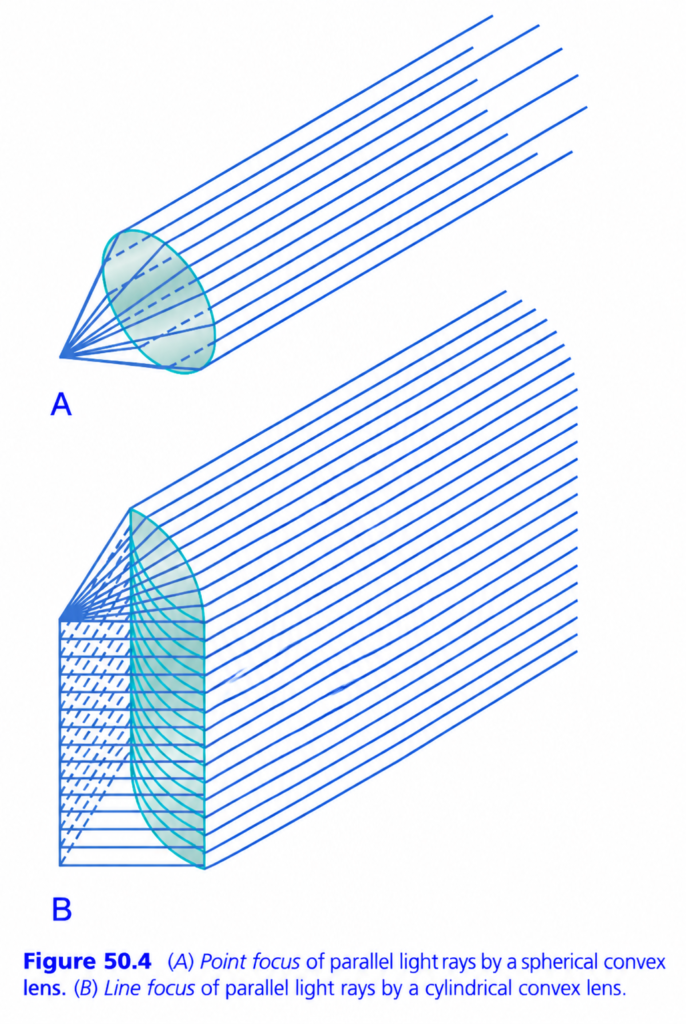
Figure 50.4 — Spherical Convex Lens vs Cylindrical Convex Lens
Main Idea
Both are convex lenses, so they bend parallel light rays inward.
But they focus light differently:
Spherical convex lens → POINT focus
Cylindrical convex lens → LINE focus
A. Spherical Convex Lens → Point Focus
- The blue parallel rays come from a distant source.
- The spherical lens is curved in all directions.
- Therefore, light rays are bent inward from every side of the lens.
- All rays finally meet at one single point.
Cause → Effect
Parallel rays
→ enter spherical convex lens
→ refracted inward in all planes
→ rays converge
→ one point focus
Dashed blue lines
These show rays coming from different parts of the lens and being directed toward the same focal point.
Key concept
Spherical lens bends light in both horizontal and vertical planes.
So:
2-dimensional bending → 1 point focus
B. Cylindrical Convex Lens → Line Focus
- The cylindrical lens has curvature mainly in one direction/plane.
- It bends light in that plane only.
- In the other plane, the rays are almost not focused.
- Therefore, instead of meeting at one point, the rays meet along a line.
Cause → Effect
Parallel rays
→ enter cylindrical convex lens
→ bending occurs in only one plane
→ rays converge in that plane
→ line focus
Blue horizontal-looking rays
They remain separated in the direction where the cylindrical lens has no effective curvature.
Dashed rays on the left
They show how rays in the curved plane are refracted inward toward the focal line.
A vs B — Easiest Comparison
| Feature | A: Spherical convex | B: Cylindrical convex |
|---|---|---|
| Curvature | All directions | Mainly one direction |
| Bends light | In all planes | In one plane |
| Final focus | Point | Line |
| Example | Ordinary magnifying lens | Cylindrical lens used in astigmatism correction |
Memory Trick
Spherical = Spot
Cylindrical = Stripe
So:
Spherical lens → spot/point
Cylindrical lens → stripe/line
⭐ Exam Recall
Figure 50.4:
Spherical convex lens refracts parallel rays in all planes → point focus.
Cylindrical convex lens refracts rays in only one plane → line focus.
Combination of Two Cylindrical Lenses at Right Angles Equals a Spherical Lens
- In Fig. 50.5B, two convex cylindrical lenses are placed at 90° to each other.
- First cylindrical lens bends rays in one direction.
- Second cylindrical lens bends rays in the other direction.
- Therefore: 1st lens bends side-to-side + 2nd lens bends top-to-bottom → all rays meet at one point
- Thus: Two cylindrical lenses crossed at 90° ≈ one spherical lens of the same refractive power
KEY CONCEPT
- Cylindrical lens → one-plane bending → focal line.
- Spherical lens → two-plane bending → focal point.
- Two cylindrical lenses at 90° → focal point → act like a spherical lens.
- Convex cylindrical → converges in one plane.
- Concave cylindrical → diverges in one plane.
CONCEPTUAL EXAMPLES
- Water-filled test tube → line of focused sunlight → cylindrical effect.
- Magnifying glass → small bright point → spherical-lens effect.
- One cylindrical lens focuses horizontally + another focuses vertically → single point focus.
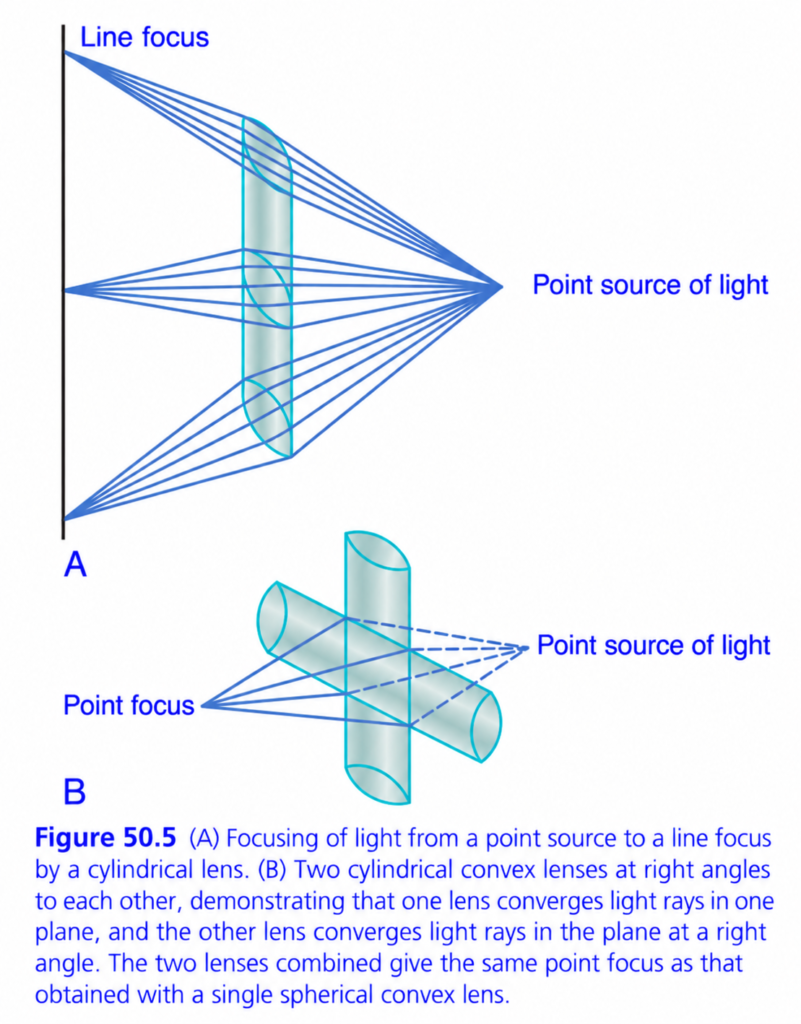
Figure 50.5 — Cylindrical Lenses: Line Focus → Point Focus
Main Concept
A cylindrical convex lens bends light in only ONE plane.
Therefore:
One cylindrical lens → LINE focus
Two cylindrical lenses at 90° → POINT focus
A. One Cylindrical Lens → Line Focus
Start from the right
“Point source of light” = light begins from one tiny point.
From this point, blue rays spread outward toward the lens.
What does the cylindrical lens do?
The blue-green cylindrical lens is curved in only one direction.
So it bends the rays:
Point source
→ rays spread toward lens
→ cylindrical lens refracts rays in one plane only
→ rays meet along a vertical line
→ LINE FOCUS
Why not a point?
Because the lens does not bend light in the perpendicular plane.
So:
Focusing in only 1 plane = line focus
Blue lines
- Blue rays = actual paths of light.
- Upper and lower rays are bent toward the line on the left.
- Rays at different heights finally reach different points along that same vertical line.
Black vertical line
This represents the line focus.
The light is concentrated along the line rather than at one single dot.
B. Two Cylindrical Convex Lenses at Right Angles
This is the most important concept in the figure.
There are two cylindrical lenses arranged at 90° to each other.
First cylindrical lens
One lens bends light in one plane.
For example:
Horizontal-plane rays → converged
But rays in the perpendicular plane are still not completely focused.
Second cylindrical lens
The second lens is rotated 90°.
Therefore, it bends rays in the other plane.
So:
Lens 1 → focuses one plane
Lens 2 → focuses the perpendicular plane
Together:
2 perpendicular planes focused → one POINT focus
Dashed Blue Lines in B
The dashed lines show the rays travelling from the point source toward the lenses before final refraction.
They help demonstrate that light starts from one point and is then acted on differently by the two perpendicular cylindrical lenses.
Why Two Cylindrical Lenses Can Behave Like One Spherical Lens
A spherical convex lens is curved in all directions, so it bends light in both perpendicular planes at the same time.
Two cylindrical lenses at 90° divide this job:
Cylindrical lens 1 = bends plane 1
+
Cylindrical lens 2 = bends plane 2
Point focus
Therefore:
Two cylindrical convex lenses at right angles ≈ one spherical convex lens
A vs B — Easiest Comparison
| Figure | Lens arrangement | Light bending | Final focus |
|---|---|---|---|
| A | One cylindrical lens | One plane | Line focus |
| B | Two cylindrical lenses at 90° | Two perpendicular planes | Point focus |
Memory Trick
1 Cylinder = 1 Line
2 Cylinders at 90° = 1 Point
Or:
One plane → Line
Two planes → Point
⭐ Exam Recall — Figure 50.5
A: A single cylindrical convex lens converges light in one plane → line focus.
B: Two cylindrical convex lenses placed at right angles focus two perpendicular planes → point focus, similar to a spherical convex lens.
