Skip to content
- Most under-5 deaths can be prevented through proven low-cost interventions.
- Childhood deaths from diarrhea and pneumonia can be prevented through vaccination and exclusive breastfeeding.
- Deaths related to undernutrition can be prevented through proper feeding practices.
- Micronutrient supplementation helps reduce malnutrition-related deaths.
- Community-based screening and management improve outcomes in malnourished children.
- Improving maternal, child, and adolescent health requires a life-course approach.
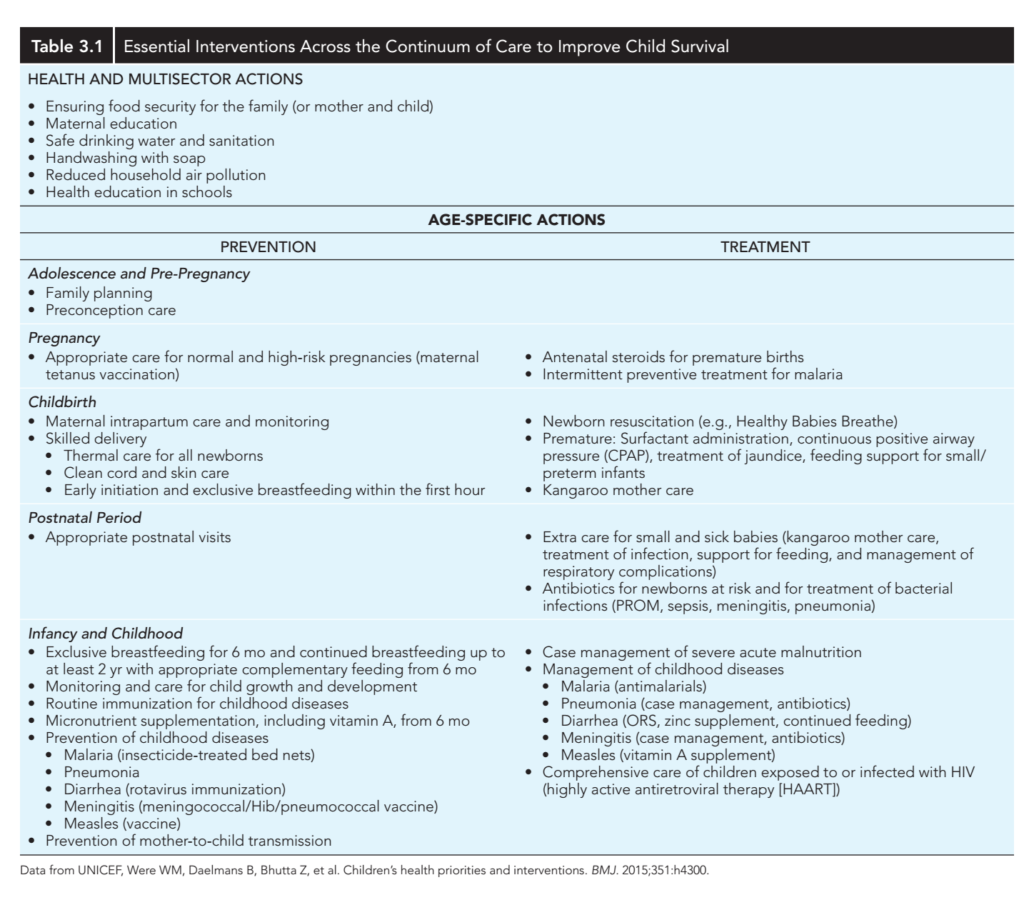
- Essential health interventions are needed from adolescence through childhood.
HEALTH AND MULTISECTOR ACTIONS
- Ensure food security for families.
- Improve maternal education.
- Provide safe drinking water and sanitation.
- Promote handwashing with soap.
- Reduce household air pollution.
- Provide health education in schools.
ADOLESCENCE AND PRE-PREGNANCY
- Family planning.
- Preconception care.
PREGNANCY
- Appropriate care for normal and high-risk pregnancies.
- Maternal tetanus vaccination.
- Antenatal steroids for premature births.
- Preventive treatment for malaria.
CHILDBIRTH
- Skilled delivery care.
- Maternal monitoring during labor.
- Thermal care for newborns.
- Clean cord and skin care.
- Early initiation of breastfeeding.
- Exclusive breastfeeding from birth.
- Newborn resuscitation when needed.
- Special care for premature and low-birth-weight infants.
- Kangaroo mother care.
POSTNATAL PERIOD
- Regular postnatal visits.
- Extra care for small and sick newborns.
- Early treatment of newborn infections.
- Support adequate feeding.
- Manage respiratory complications.
INFANCY AND CHILDHOOD
- Exclusive breastfeeding for the first 6 months.
- Continue breastfeeding with complementary feeding thereafter.
- Monitor child growth and development.
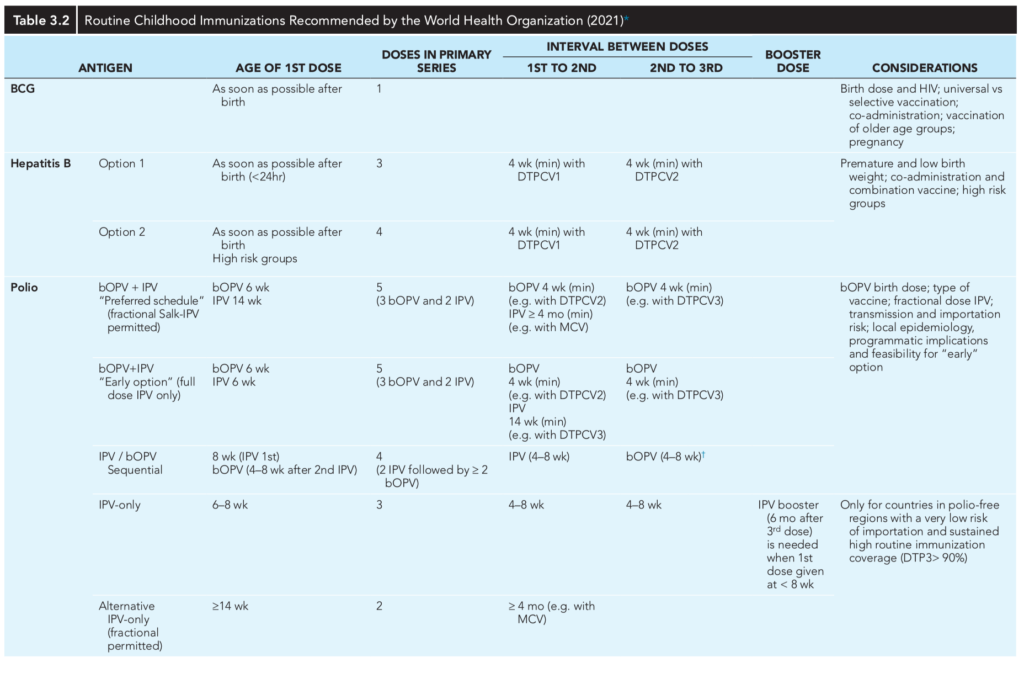
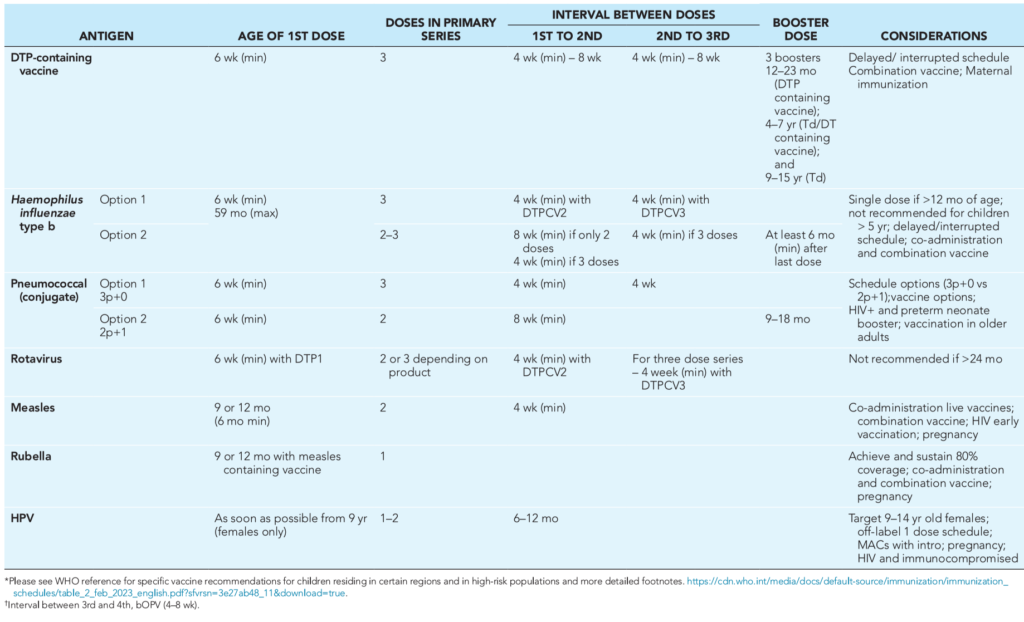
- Ensure routine childhood immunization.
- Provide micronutrient supplementation, including vitamin A.
PREVENTION OF CHILDHOOD DISEASES
- Prevent malaria through insecticide-treated bed nets.
- Prevent pneumonia through vaccination and preventive care.
- Prevent diarrhea through rotavirus vaccination.
- Prevent meningitis through vaccination.
- Prevent measles through vaccination.
- Prevent mother-to-child transmission of infections.
MANAGEMENT OF CHILDHOOD DISEASES
- Manage severe acute malnutrition.
- Treat malaria appropriately.
- Treat pneumonia with proper case management and antibiotics.
- Treat diarrhea with ORS, zinc, and continued feeding.
- Treat meningitis with appropriate therapy.
- Provide vitamin A in measles.
- Provide comprehensive care for children affected by HIV.
VACCINE-PREVENTABLE DISEASES
- Vaccines save millions of children’s lives every year.
- Vaccination is one of the most effective child survival interventions.
- Many child deaths are still caused by vaccine-preventable diseases.
- Most vaccine-preventable deaths occur in low- and middle-income countries.
- Major vaccine-preventable pathogens include:
- Streptococcus pneumoniae
- Rotavirus
- Bordetella pertussis
- Measles virus
- Haemophilus influenzae type B (Hib)
- Influenza virus
- The WHO Expanded Program on Immunization (EPI) has greatly reduced childhood illness, disability, and death.
- Immunization programs have nearly eliminated poliomyelitis in many regions.
- COVID-19 disrupted routine vaccination services worldwide.
- Reduced vaccination coverage increases the risk of disease outbreaks.
REACHING EVERY CHILD, EVERYWHERE
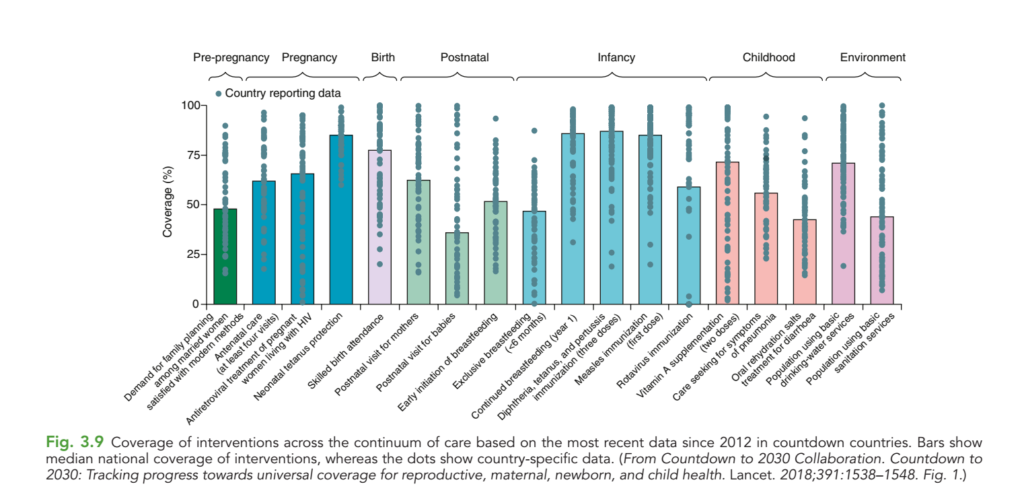
- Universal coverage of lifesaving interventions remains a major challenge.
- Many children still do not receive proven treatments such as oral rehydration therapy.
- Access to healthcare is influenced by health systems, social factors, and political conditions.
- Strategies to improve coverage include:
- Community mapping.
- Quality improvement programs.
- Integrated service delivery.
- Better disease surveillance.
- Strengthening health systems.
EFFECTIVE DELIVERY STRATEGIES: IMCI
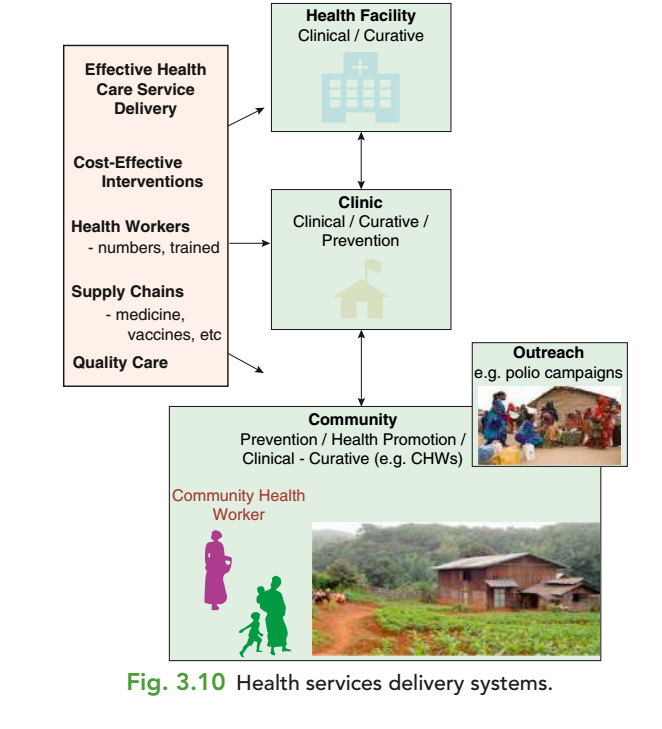
- Weak health systems limit delivery of lifesaving child health interventions.
- Common problems include:
- Shortage of health workers.
- Poor training and supervision.
- Weak supply chains.
- Child health services must be integrated across communities, clinics, and hospitals.
- Community outreach services remain essential for improving child survival.
- Community-based interventions are effective, affordable, and improve healthcare-seeking behavior.
- Community Health Workers (CHWs) play an important role in extending healthcare delivery.
- Separate disease-specific programs can result in missed opportunities for comprehensive child care.
- Children often present with multiple overlapping health problems.
INTEGRATED MANAGEMENT OF CHILDHOOD ILLNESS (IMCI)
- IMCI was developed by UNICEF and WHO to reduce child mortality, illness, and disability.
- IMCI promotes healthy growth and development.
- IMCI combines:
- Health promotion.
- Disease prevention.
- Disease treatment.
- IMCI uses standardized clinical algorithms for case management.
- Community Health Workers are trained to recognize common childhood illnesses.
- CHWs identify children needing referral to health facilities.
- CHWs educate families on home management of illness.
- CHWs promote:
- ORS and zinc for diarrhea.
- Appropriate treatment of malaria.
- Antibiotics for pneumonia.
- Bed-net use.
- Handwashing.
- Proper infant feeding.
- IMCI was later expanded to include newborn care and became IMNCI.
- More than 100 countries have adopted IMNCI.
- IMNCI improves:
- Health worker skills.
- Health systems.
- Family and community practices.
- Proper implementation of IMNCI reduces child mortality.
- Successful implementation requires:
- Strong government commitment.
- Adequate health systems.
- Trained community health workers.
- Reliable medication supplies.
- Effective referral systems.
- Support from international partners.
KEY CONCEPT
- Most under-5 deaths can be prevented with low-cost evidence-based interventions.
- Vaccination, breastfeeding, nutrition, sanitation, and early treatment are the foundations of child survival.
- Community-based healthcare is essential for reaching vulnerable children.
- Strong health systems are required to deliver lifesaving interventions effectively.
- IMCI/IMNCI integrates prevention, treatment, and health promotion to reduce child mortality and improve child health.