


For studying this topic, students should be able to:
- Define the focal length of a convex lens.
- Explain how parallel and diverging light rays are focused by a convex lens.
- Describe how changing lens convexity changes the focal distance.
- Explain how a convex lens forms an image from multiple point sources.
- Describe why the image formed by a convex lens is inverted and laterally reversed.
- Define refractive power and the diopter.
- Calculate lens power using Power = 1 / focal length in meters.
- Differentiate the refractive power of convex and concave lenses.
- Explain how convex and concave lenses can neutralize each other’s refractive power.
- Describe the refractive power and axis of cylindrical lenses.
- Focal length = distance from a convex lens to the point where parallel light rays meet.
- In the top diagram of Fig. 50.6: Parallel rays → convex lens → converge → focal point
- So: Lens → focal point = focal length
- In the middle diagram:
- light comes from a nearby point source
- rays are already diverging before reaching the lens
- Because the rays are spreading apart: Diverging rays → same convex lens → focus farther away
- Therefore: More divergence before entering lens → greater distance needed to bring rays together
- In the bottom diagram, the incoming rays are also diverging, but the lens has greater convexity.
- Greater convexity means: stronger bending of light rays
- Therefore: Diverging rays + more convex lens → stronger convergence → focus can be brought closer
- In the bottom diagram, the stronger lens bends the diverging rays enough so that they focus at the same distance as the parallel rays in the top diagram.
- This shows: Parallel rays + weaker convex lens → same focus distance can be matched by: Diverging rays + stronger convex lens → same focus distance
KEY CONCEPT
- Parallel rays → normal focal length.
- Diverging rays → focus farther away if lens power stays the same.
- Increase lens convexity → increase refractive power → bring focus closer.
- Thus, changing lens convexity can compensate for changing distance of the object.
CONCEPTUAL EXAMPLE
- Far object → rays nearly parallel → less convex lens is enough.
- Near object → rays more divergent → lens must become more convex to focus them at the same point.
Easy memory:
Near object → more divergence → more convex lens needed.
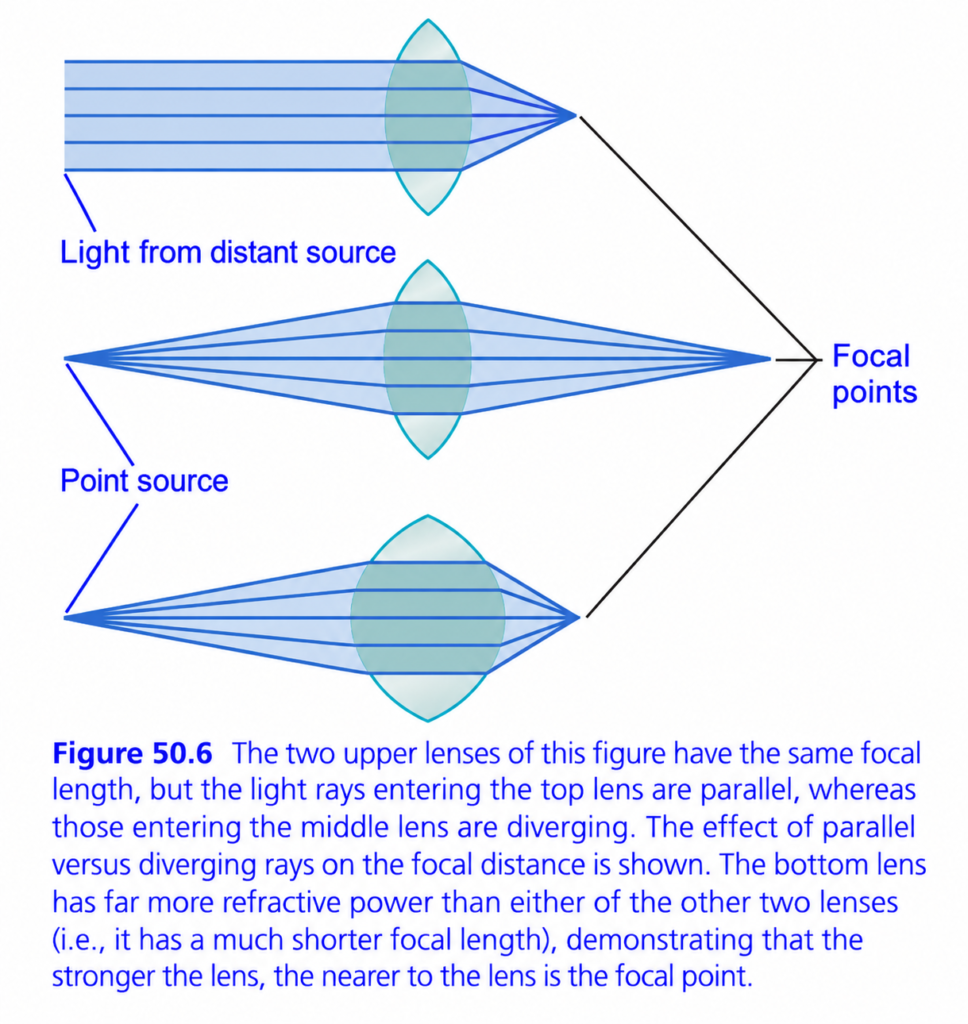
Figure 50.6 — Focal Length and Lens Power
Main Concept
Where light finally meets after passing through a convex lens = focal point.
Distance from lens to focal point = focal length.
The figure compares 3 situations.
1. Top Lens — Parallel Rays from a Distant Source
- Light comes from a very distant source.
- Therefore, rays reach the lens almost parallel.
- The convex lens bends all rays inward.
- They meet at one point.
Cause → Effect
Distant source
→ parallel rays
→ convex lens bends rays inward
→ rays meet at focal point
This distance is the normal focal length of that lens.
2. Middle Lens — Diverging Rays from a Nearby Point Source
Here the light starts from a nearby point source.
So before reaching the lens, the rays are already spreading apart (diverging).
The lens must first overcome this divergence and then bring the rays together.
Therefore:
Diverging rays need more distance after the lens before they meet.
Result
Same lens power + diverging incoming rays → focal point farther away
Important:
The top and middle lenses have the same focal length/power, but the incoming rays are different.
- Top: parallel rays
- Middle: diverging rays
So the actual image/focus position is farther away in the middle case.
3. Bottom Lens — Stronger Convex Lens
The bottom lens is more strongly curved/thicker.
This means it has greater refractive power.
It bends light more strongly.
So rays come together sooner.
Cause → Effect
Stronger lens
→ greater bending of light
→ rays converge faster
→ focal point closer to lens
→ shorter focal length
Most Important Relationship
Strong lens
High refractive power → short focal length
Weak lens
Low refractive power → long focal length
So:
Lens power ↑ → focal length ↓
and
Lens power ↓ → focal length ↑
What the Black Lines Show
The black lines simply help compare the positions of the different focal points.
They show that the focal point can be:
- relatively near,
- relatively far,
- or even closer with a stronger lens.
Easiest Comparison
| Situation | Incoming light | Lens strength | Where rays meet? |
|---|---|---|---|
| Top | Parallel | Normal | Normal focal distance |
| Middle | Diverging | Same as top | Farther away |
| Bottom | Diverging | Stronger | Much closer |
Memory Trick
Strong lens = Strong bend = Short focus
Weak lens = Weak bend = Long focus
⭐ Exam Recall — Figure 50.6
Parallel rays entering a convex lens focus at its focal length.
Diverging rays from a nearby source focus farther from the lens.
A stronger convex lens has greater refractive power and a shorter focal length.
Formation of an Image By a Convex Lens
- A convex lens forms an image by bringing light rays from each point of an object to a corresponding point focus on the opposite side of the lens.
- In Fig. 50.7A, there are two point sources of light.
- Rays passing through the center of the lens continue almost straight without significant refraction.
- Therefore, each point source forms a focused point on the opposite side, along a line passing through:
- the original point source
- the center of the lens
- the corresponding image point
- A real object is actually made of many tiny point sources of light.
- These points differ in:
- brightness
- color
- position
- Each point on the object forms its own separate point focus after passing through the lens.
- All these focused points together form the complete image.
- If a white screen is placed at the correct focus distance, the image can be seen, as in Fig. 50.7B.
- The image formed by a convex lens is:
- upside down
- laterally reversed
- A camera lens forms images by the same basic principle.
KEY CONCEPT
- Object = many point sources
- Each object point → one image point
- All image points together → complete image
- Convex lens forms a real, inverted image on the opposite side.
CONCEPTUAL EXAMPLE
- Top point of object sends rays through the lens → rays meet at the lower part of the image.
- Bottom point of object → rays meet at the upper part.
- Therefore: Top becomes bottom + left becomes right → inverted image
Easy memory:
Convex lens crosses light rays → image becomes upside down.
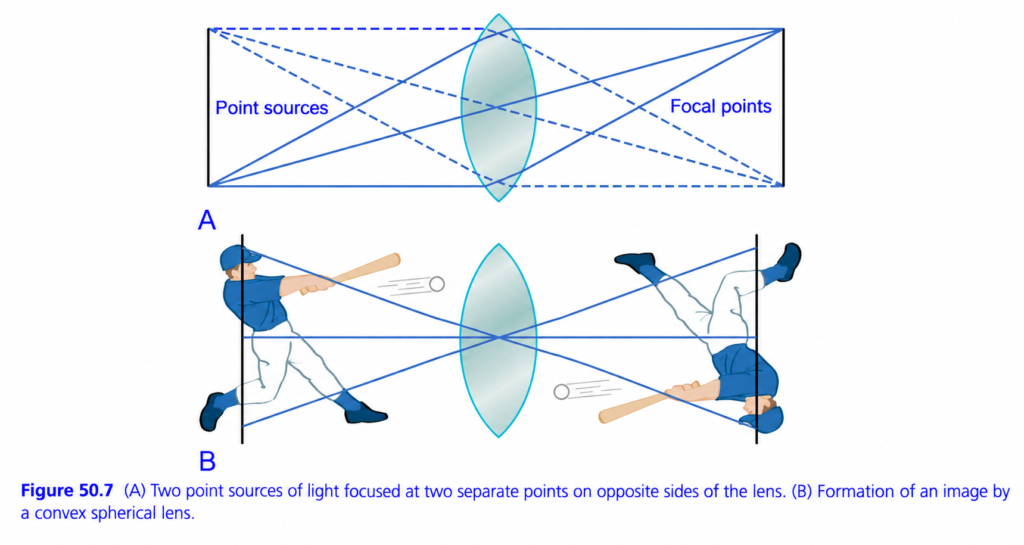
Figure 50.7 — Formation of an Image by a Convex Lens
Main Concept
A convex spherical lens takes light coming from each tiny point of an object and brings it to a corresponding point on the opposite side.
When millions of these focused points combine:
many point sources → many image points → complete image
A. Two Point Sources → Two Focal Points
On the left, there are two separate point sources of light:
- one upper point
- one lower point
Each point sends rays in many directions toward the convex lens.
What happens at the lens?
The convex lens refracts the rays inward.
Each group of rays then meets at its own focal point on the right.
Important observation
Upper point source → lower focal point
Lower point source → upper focal point
Why?
Because the rays cross after passing through the lens.
So the position becomes reversed.
Solid and dashed blue rays
They simply represent rays coming from the two different point sources.
Each group remains associated with its own source and finally converges at its own image point.
Important Central-Ray Rule
A ray passing through approximately the center of the lens undergoes very little directional change.
Therefore, you can imagine:
object point → center of lens → corresponding image point
This makes it easy to predict where the image will appear.
B. Formation of the Whole Image
A real object, such as the baseball player, is not just one point.
It is made of thousands/millions of tiny light-producing or light-reflecting points.
For example:
- head = many point sources
- bat = many point sources
- feet = many point sources
- clothes = many point sources
The lens focuses each object point separately.
Step-by-step
Every point on object
→ sends light toward lens
→ convex lens bends the rays
→ each point is focused to a corresponding point
→ all image points combine
→ complete image forms
Why Is the Image Upside Down?
Look at the ray crossing:
Top of object → becomes bottom of image
Bottom of object → becomes top of image
Therefore:
rays cross → image becomes inverted
That is why the baseball player on the right appears upside down.
Why Are the Sides Reversed?
The same crossing occurs for different lateral parts of the object.
So the real image produced by the convex lens is:
vertically inverted + laterally reversed
What Do the Black Vertical Lines Represent?
- Left black line = object plane
- Right black line = image plane
The lens forms a sharp image when the receiving surface is placed at the correct image distance.
Easiest Way to Understand the Whole Figure
Think of the baseball player as a collection of tiny dots.
Each object dot → lens → corresponding image dot
But because rays cross:
upper dots → lower image dots
lower dots → upper image dots
So the entire image becomes inverted.
Memory Trick
Convex lens: Cross → Focus → Flip
Rays cross → points focus → image flips
⭐ Exam Recall — Figure 50.7
Each point on an object acts as a separate point source. A convex lens focuses light from each point onto a corresponding point on the opposite side. Because the rays cross, the real image is inverted and reversed.
Measurement of the Refractive Power of a Lens—Diopter
- Refractive power tells how strongly a lens bends light.
- Unit of refractive power = diopter (D).
- For a convex lens: Refractive power (D) = 1 / focal length in meters
- Therefore, a lens with a shorter focal length has greater refractive power.
- Examples:
- focal length = 1 m → +1 D
- focal length = 0.5 m → +2 D
- focal length = 0.10 m → +10 D
- So: More bending → shorter focal length → higher positive diopter
- A convex lens has positive (+) diopters because it converges light rays.
- In Fig. 50.8, parallel rays focused 1 meter behind the lens represent a +1 D lens.
- A concave lens spreads light rays instead of bringing them to a real focal point.
- Therefore, concave lens power is written with a negative sign.
- Examples:
- concave lens that diverges as strongly as a +1 D convex lens converges → −1 D
- stronger concave lens with equivalent divergence to +10 D convergence → −10 D
- Thus: Convex lens → + diopter → convergence
Concave lens → − diopter → divergence - Concave and convex lens powers can neutralize each other.
- Example: +1 D convex + (−1 D concave) = 0 D
- So the combined lens system has zero refractive power.
- Cylindrical lens power is calculated in the same way, but its axis must also be specified.
- Example:
- cylindrical lens forms a line focus at 1 meter
- power = +1 D
- A concave cylindrical lens with equal opposite effect has: −1 D
- Cylindrical axis:
- horizontal line focus → 0° axis
- vertical line focus → 90° axis
KEY CONCEPT
- Diopter = strength of a lens.
- D = 1 / focal length in meters
- Short focal length → strong lens → high diopter
- Convex = positive diopter
- Concave = negative diopter
- Opposite powers cancel each other.
CONCEPTUAL EXAMPLES
- f = 1 m → 1/1 = +1 D
- f = 0.5 m → 1/0.5 = +2 D
- f = 0.1 m → 1/0.1 = +10 D
- +3 D convex + −3 D concave = 0 D
Easy memory:
Short focus = Strong lens = More diopters.
Measurement of Refractive Power of a Lens — Diopter
Main Concept
Refractive power = how strongly a lens bends light.
- More bending → greater refractive power
- Less bending → lower refractive power
- Unit = Diopter (D)
1. Formula for Lens Power
Where:
- P = lens power in diopters (D)
- f = focal length in meters
Easy rule
Short focal length = strong lens = high diopter
Long focal length = weak lens = low diopter
2. Convex Lens → Positive Diopters
A convex lens converges parallel light rays.
Therefore, its power is written with a + sign.
Example 1 — +1 D
If parallel rays meet 1 meter behind the lens:
So:
Focal length = 1 m → Power = +1 D
This is shown in Fig. 50.8.
Example 2 — +2 D
If the lens is twice as powerful, it bends light more strongly.
So:
+2 D → focal point only 0.5 m away
Concept
Power ↑ → focal point comes closer
Example 3 — +10 D
If:
Then:
So:
+10 D = very strong converging lens → focal point only 10 cm away
3. Concave Lens → Negative Diopters
A concave lens does not converge light.
It makes rays diverge (spread apart).
Therefore, concave lens power is written with a − sign.
Example
If a concave lens spreads rays by the same amount that a +1 D convex lens would converge them:
Similarly:
If it diverges rays as strongly as a +10 D convex lens converges them:
Easy Memory
Convex = Converges = +
Concave = Diverges = −
4. Convex and Concave Lenses Can Neutralize Each Other
Suppose:
- Convex lens = +1 D
- Concave lens = −1 D
Put them together:
So the combined system has:
Meaning
The concave lens cancels the bending produced by the convex lens.
+ power + equal − power = no net refractive power
5. Cylindrical Lens Power
The power of a cylindrical lens is calculated in the same way:
But there is one extra thing:
You must also mention its axis.
Why?
Because a cylindrical lens bends light in one plane only.
So we need to know the direction/orientation of the cylinder.
Cylindrical Convex Lens
If it produces a line focus 1 meter away:
So:
Convex cylindrical lens → +1 D
Cylindrical Concave Lens
If it diverges rays by the same amount:
So again:
Convex cylinder = positive
Concave cylinder = negative
6. Axis of Cylindrical Lens
The direction of the line focus is expressed in degrees.
According to the text:
- Horizontal line focus → axis = 0°
- Vertical line focus → axis = 90°
This axis information is especially important when describing cylindrical lenses used for astigmatism.
Most Important Relationship
Therefore:
Focal length ↓ → Lens power ↑
Focal length ↑ → Lens power ↓
Quick Table
| Focal length | Lens power |
|---|---|
| 1 m | +1 D |
| 0.5 m | +2 D |
| 0.25 m | +4 D |
| 0.10 m | +10 D |
🧠 Memory Trick
D = 1 / Distance
and
Strong lens → Short focus
⭐ Exam Recall
Diopter measures refractive power.
Convex lens = positive diopters.
Concave lens = negative diopters.
Equal positive and negative lenses neutralize each other.
Cylindrical lens prescription requires both power and axis.
Summary
A convex lens bends parallel light rays inward until they meet at a common focal point. The distance between the lens and this focal point is called the focal length.
If rays are already diverging before reaching the lens, they normally require more refractive effect or a greater distance before they can be brought together. Increasing the convexity of the lens increases its ability to bend light and can compensate for this divergence, as demonstrated in Fig. 50.6.
A convex lens can also form an image by bringing light rays from different points of an object into corresponding points on the opposite side of the lens, as shown in Fig. 50.7A and Fig. 50.7B.
The ability of a lens to bend light is called refractive power and is measured in diopters. Lens power is inversely related to focal length:
A convex lens has positive power, whereas a concave lens has negative power. Equal positive and negative powers can neutralize each other. Cylindrical lenses are also measured in diopters, but their axis must additionally be specified.
Reference
Guyton and Hall Textbook of Medical Physiology — Chapter 50
Study topic: Focal Length of a Lens, Formation of an Image by a Convex Lens, and Measurement of Refractive Power of a Lens.
