


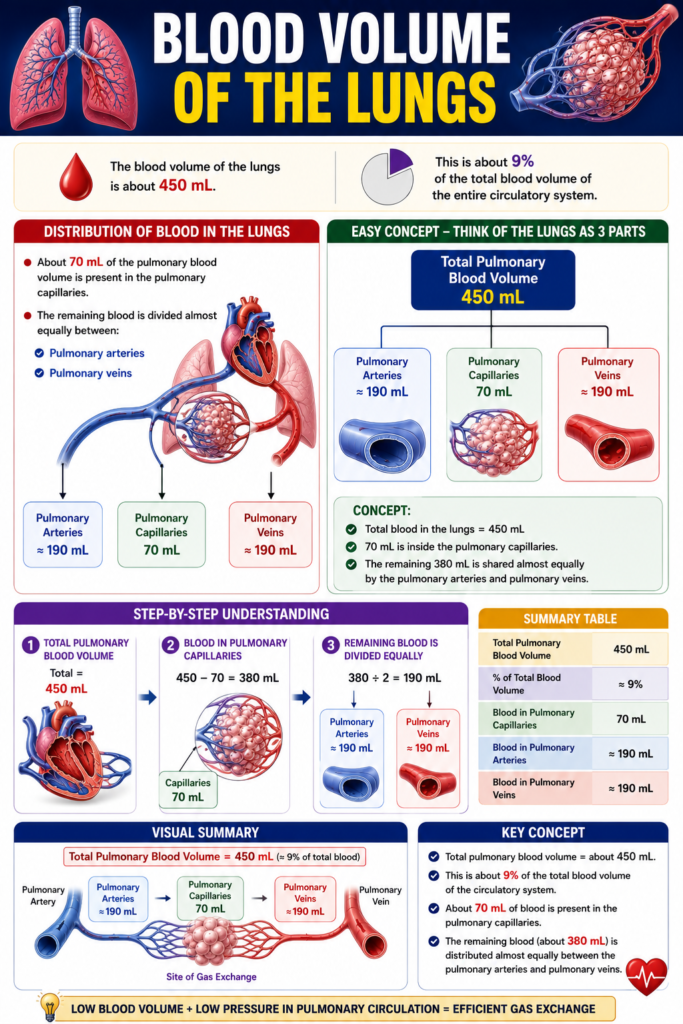
- The blood volume of the lungs is about 450 mL.
- This is about 9% of the total blood volume of the entire circulatory system.
Distribution of Blood in the Lungs
- About 70 mL of the pulmonary blood volume is present in the pulmonary capillaries.
- The remaining blood is divided almost equally between:
- Pulmonary arteries
- Pulmonary veins
Easy Concept
Think of the 450 mL of blood in the lungs as being divided into three parts.
Total Pulmonary Blood Volume
        450 mL
           │
 ┌─────────┼─────────┐
 │         │         │
 ▼         ▼         ▼
Pulmonary  Pulmonary  Pulmonary
Arteries   Capillaries  Veins
   │           │          │
≈190 mL      70 mL      ≈190 mL
Concept:
- Total blood in the lungs = 450 mL
- 70 mL is inside the pulmonary capillaries.
- The remaining 380 mL is shared almost equally by the pulmonary arteries and pulmonary veins.
Step-by-Step Understanding
Step 1: Total Pulmonary Blood Volume
Total = 450 mL
↓
Step 2: Blood in Pulmonary Capillaries
450 − 70 = 380 mL
↓
Step 3: Remaining Blood Is Divided Equally
380 ÷ 2 = 190 mL
So,
- Pulmonary arteries ≈ 190 mL
- Pulmonary veins ≈ 190 mL
Key Concept
- Total pulmonary blood volume = about 450 mL.
- This is about 9% of the total blood volume of the circulatory system.
- About 70 mL of blood is present in the pulmonary capillaries.
- The remaining blood (about 380 mL) is distributed almost equally between the pulmonary arteries and pulmonary veins.
Lungs Serve as a Blood Reservoir
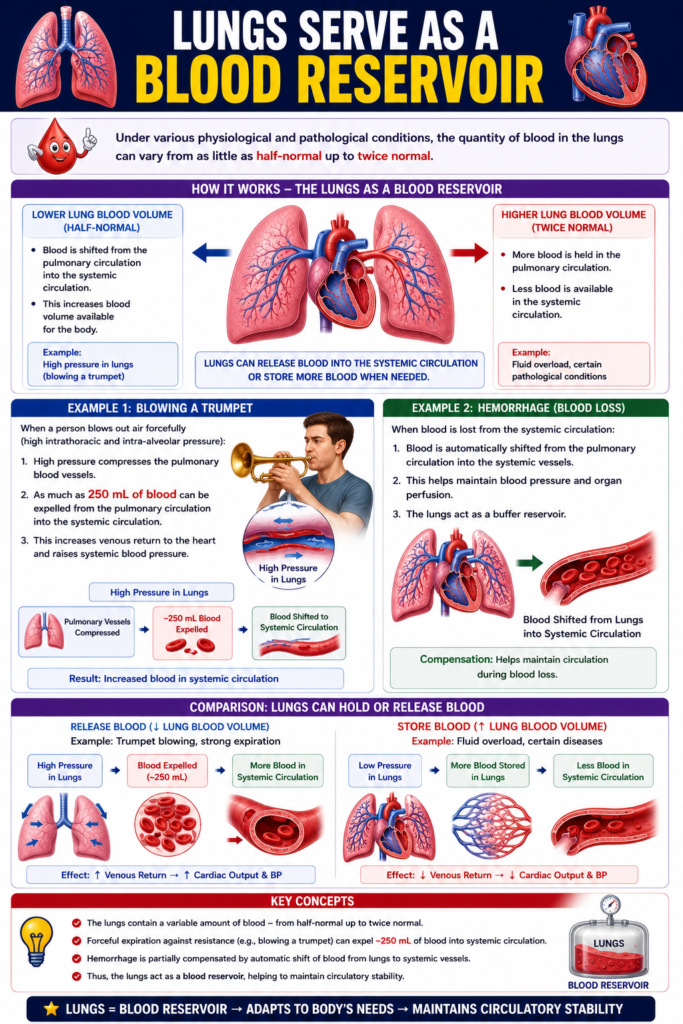
- The lungs act as a blood reservoir.
- Under different physiological and pathological conditions, the amount of blood in the lungs can change.
- The pulmonary blood volume may decrease to about half of the normal amount.
- It may also increase to about twice the normal amount.
Example: High Pressure in the Lungs
- When a person blows out air very forcefully, high pressure develops inside the lungs.
- This occurs during activities such as blowing a trumpet.
- Under these conditions, up to 250 mL of blood can be pushed out of the pulmonary circulation into the systemic circulation.
Easy Concept
Think of the lungs as a temporary blood storage tank.
Normal Condition
        │
        ▼
Lungs Store Blood
        │
        ▼
High Lung Pressure
(e.g., Blowing a Trumpet)
        │
        ▼
Blood Is Pushed Out
        │
        ▼
Systemic Circulation
(Up to 250 mL)
Concept:
- The lungs store extra blood.
- When lung pressure increases, part of this stored blood is released into the systemic circulation.
Example: Blood Loss (Hemorrhage)
- During hemorrhage, blood is lost from the systemic circulation.
- The body automatically shifts blood from the lungs into the systemic circulation.
- This movement of blood partly compensates for the blood loss.
Easy Concept
Blood Loss
(Hemorrhage)
        │
        ▼
Less Blood in Systemic Circulation
        │
        ▼
Blood Moves From the Lungs
        │
        ▼
Systemic Circulation
        │
        ▼
Partial Compensation
Concept:
- The lungs act as a reserve blood bank.
- When the body needs extra blood, the lungs release part of their stored blood into the systemic circulation.
Key Concept
- The lungs serve as a blood reservoir.
- The amount of blood in the lungs can vary from about half-normal to twice normal.
- During forceful expiration (e.g., blowing a trumpet), high lung pressure pushes up to 250 mL of blood from the pulmonary circulation into the systemic circulation.
- During hemorrhage, the body automatically shifts blood from the lungs to the systemic circulation, helping to partly compensate for blood loss.
Cardiac Pathology May Shift Blood From Systemic Circulation to Pulmonary Circulation
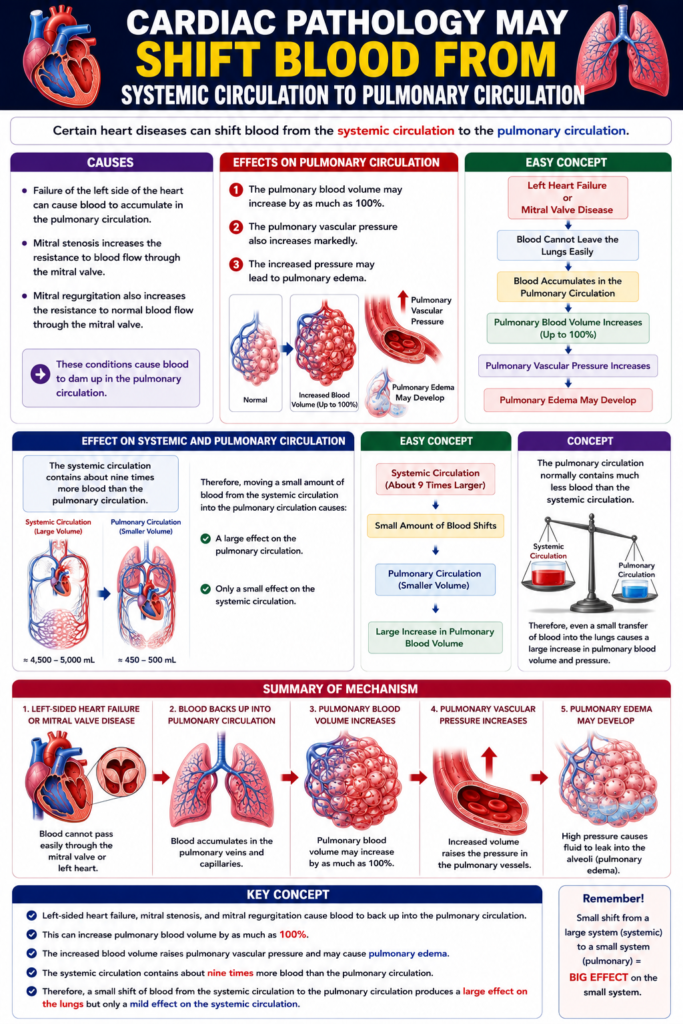
- Certain heart diseases can shift blood from the systemic circulation to the pulmonary circulation.
Causes
- Failure of the left side of the heart can cause blood to accumulate in the pulmonary circulation.
- Mitral stenosis increases the resistance to blood flow through the mitral valve.
- Mitral regurgitation also increases the resistance to normal blood flow through the mitral valve.
- These conditions cause blood to dam up in the pulmonary circulation.
Effects on Pulmonary Circulation
- The pulmonary blood volume may increase by as much as 100%.
- The pulmonary vascular pressure also increases markedly.
- The increased pressure may lead to pulmonary edema.
Easy Concept
Think of the left side of the heart as the exit door for blood leaving the lungs.
Left Heart Failure
or
Mitral Valve Disease
        │
        ▼
Blood Cannot Leave the Lungs Easily
        │
        ▼
Blood Accumulates
in the Pulmonary Circulation
        │
        ▼
Pulmonary Blood Volume Increases
(Up to 100%)
        │
        ▼
Pulmonary Vascular Pressure Increases
        │
        ▼
Pulmonary Edema May Develop
Concept:
- If blood cannot move easily through the left side of the heart, it backs up into the lungs.
- This causes more blood to remain in the pulmonary circulation.
Effect on Systemic and Pulmonary Circulation
- The systemic circulation contains about nine times more blood than the pulmonary circulation.
- Therefore, moving a small amount of blood from the systemic circulation into the pulmonary circulation causes:
- A large effect on the pulmonary circulation.
- Only a small effect on the systemic circulation.
Easy Concept
Systemic Circulation
(About 9 Times Larger)
        │
        ▼
Small Amount of Blood Shifts
        │
        ▼
Pulmonary Circulation
(Smaller Volume)
        │
        ▼
Large Increase in Pulmonary Blood Volume
Concept:
- The pulmonary circulation normally contains much less blood than the systemic circulation.
- Therefore, even a small transfer of blood into the lungs causes a large increase in pulmonary blood volume and pressure.
Key Concept
- Left-sided heart failure, mitral stenosis, and mitral regurgitation cause blood to back up into the pulmonary circulation.
- This can increase pulmonary blood volume by as much as 100%.
- The increased blood volume raises pulmonary vascular pressure and may cause pulmonary edema.
- The systemic circulation contains about nine times more blood than the pulmonary circulation.
- Therefore, a small shift of blood from the systemic circulation to the pulmonary circulation produces a large effect on the lungs but only a mild effect on the systemic circulation.
MADE BY SELF LEARNING CEO AND FOUNDER DR SHEEN
